About 410 minutes
The Proof of the Pudding — Text and Context
Historical Psychological Social Fiction
94,144 recorded words. 39 minutes difference from this book's estimate.
View Gutenberg source #66354
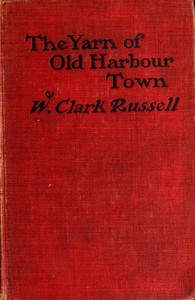
Before opening The Yarn of Old Harbour Town — A Closer Reading, the edition data offers a quick orientation: 103,164 words, 7 hr 29 min estimated reading time, and 10 detected text sections.
The text analysis averages about 23.6 words per sentence, while the detected sections provide another way to judge how the source is divided.
Project Gutenberg metadata also associates the work with “Historical fiction,” connecting these edition facts with the source record’s subject description.
Explore this collection
These alternatives are selected using recorded categories and estimated reading time.
About 410 minutes
Historical Psychological Social Fiction
94,144 recorded words. 39 minutes difference from this book's estimate.
View Gutenberg source #66354About 388 minutes
Historical Psychological Social Fiction
89,019 recorded words. 61 minutes difference from this book's estimate.
View Gutenberg source #66754About 514 minutes
Historical Psychological Social Fiction
118,079 recorded words. 65 minutes difference from this book's estimate.
View Gutenberg source #65630Search stored excerpts and compare books → Choose by your preferences →
Choices use stored catalog measurements. Estimates vary with reading speed. A shared category is a catalog label, not a claim that two books have the same argument or literary quality.
Search reads excerpt text stored with this catalog and links to its associated Gutenberg record. The connection is stored in the site database; this tool does not recheck that every excerpt is word-for-word identical to that external record. Excerpt search does not cover every chapter and does not verify historical publication dates.
Catalog snapshot checked: 2026-09-25. Coverage: 92 public books, 92 available source excerpts.
Calculated from edition completeness, EPUB availability, text structure and catalogue metadata. Not a user rating.
Total of 100 points, scaled to a 2.5-5.0 range. Editions with an empty description or a missing EPUB file are not scored.
Public-domain source text
The source text is kept in the dedicated reader, separate from this catalogue record and its commentary.
The narrative begins not at sea but with a precise, almost architectural description of Old Harbour House, a mansion that burned down on Christmas Eve 1832. The house, designed by Inigo Jones, features a circular window framed like a ship's wheel—a detail that subtly links the domestic setting to the maritime world. The opening chapter establishes a strong sense of place, contrasting the ravine, river, lighthouse, and windmill with the town across the way.
From this land-bound start, the story quickly moves to the barque Minorca, which departed Old Harbour that morning. The ship's description is notably technical: its rig is called “very unfamiliar” for the period, and the text explains that merchant vessels adopted improvements faster than navy ships. The mate, Mr. Eagle, is introduced with a focus on his “sullenness” and “sour, sneering, quarrelsome air,” suggesting tension aboard.
The opening pages devote considerable attention to the physical layout of Old Harbour Town and its surroundings. Old Harbour House is placed “about a mile from the Harbour,” facing the town across a “wide, romantic, heavily-wooded ravine.” The description includes a river that “sang in measures of music” as it flows into the harbour, and a lighthouse that “wheezed at night a yellow gleam.” These details create a vivid, almost painterly setting.
The house itself is given a specific architectural pedigree: “built after a design by Inigo Jones,” with a pediment perforated by a circular window whose frame “resembled the spokes of a ship’s wheel.” This wheel-like window is a telling detail, foreshadowing the maritime focus. The fire that destroyed the house on Christmas Eve 1832 is described as a “wild, grand show,” and the text notes that a local poet celebrated the event in rhymes—the same verse quoted on the title page. This layering of description, history, and local color establishes a strong sense of place before any character appears.
When the scene shifts to the Minorca, the prose becomes more technical. The ship is described as a barque under “all plain sail,” with “many wings” and sails introduced by Lord St Vincent. The text contrasts merchant and navy ship design, noting that merchantmen were “quicker than Navy ships to adopt improvements.” The Minorca itself is called a “stump-ended fabric” that would “excite laughter in this age,” yet it was capable of long voyages.
The mate, Mr. John Eagle, is introduced walking the quarterdeck. His description is notably negative: “a very mean sort of man,” with no individuality or character, and a “sour, sneering, quarrelsome air about the mouth.” This stands in contrast to the detailed, almost affectionate description of the ship. The look-out man is perched on the fore-topgallant yard, instructed to report any sail. The atmosphere is one of wartime vigilance: “War had swept the narrow seas,” and convoys under protection of men-of-war are mentioned. The Minorca is sliding through water that “beautified the copper” under her weather-bow.
The title The Yarn of Old Harbour Town signals a storytelling mode, and the epigraph—a verse from “Old Rhymes, 1835”—reinforces this. The novel opens with a long, descriptive passage that delays the introduction of characters, instead immersing the reader in the geography and history of the setting. The fire that destroyed Old Harbour House is presented as a past event, and the house itself is described in the past tense: “It has been said that Old Harbour House stood.”
The shift from land to sea is abrupt: after the detailed description of the house and town, the narrative jumps to the Minorca already at sea, with the English coast reduced to a “delicate vision.” The mate Mr. Eagle is seen walking the deck, and then Mr. Lawrence appears. The text does not explain who these characters are or their relationship; it simply presents them in action. This technique—offering vivid scenes without immediate context—is characteristic of a yarn, where the story unfolds through a series of episodes. The excerpts suggest a narrative that values atmosphere and technical detail over rapid plot advancement.
Readers should note that the catalog subjects list this as both “Historical fiction” and “Sea stories,” and the excerpts bear out both labels. The historical setting is established through the description of wartime Channel traffic and the specific ship design, while the sea story elements are evident in the technical language and the focus on the Minorca. However, the opening also contains a strong domestic and architectural element that may not be fully captured by those categories. The yarn structure suggests that the narrative may continue to alternate between land and sea, with the title’s “Old Harbour Town” serving as a fixed point of reference.
There’s a particular hush in Russell’s Old Harbour Town, the way Mr. Eagle’s silence sits against the Channel’s restless wartime tide. It reminds me, oddly, of another quiet—a first winter’s stillness, where hope is measured not in rigging but in gathered breath. Both stories keep their warmth tucked low, like embers. That kinship is why I reach for The Pilgrims' First Christmas — Key Ideas to Explore and simply hold it, without turning a page.
Save your reaction, strongest insight, and memorable passage.