eBooks
92 Books foundWelcome to the NUEQU Public Domain Literature Library
The NUEQU Public Domain Literature Library, accessible at nuequ.com/ebooks, offers a curated collection of 92 works from Project Gutenberg and other public-domain sources. Each book is presented with editorial notes that illuminate its themes, structure, and historical context. The catalogue is designed for readers who wish to explore literature beyond mere text, with guides that help situate works within broader literary traditions.
Browsing the Catalogue
The catalogue is organized into four active subject categories: Adventure Picaresque Fiction; Fantasy Juvenile Worlds; Science Fiction Utopias; and Historical Psychological Social Fiction. These groupings are practical navigation aids based on the current catalogue and may overlap where a work fits more than one reading context.
Book Record Information
Each book record includes title, author(s), publisher (typically Project Gutenberg), keywords, target reader, and a catalogue note summarizing the work's content and editorial approach. The keywords and target-reader fields help users gauge relevance, while the catalogue note provides a critical orientation. Illustrators are listed where applicable.
Source Attribution
All texts are sourced from Project Gutenberg, a volunteer-driven digital library of public-domain works. The NUEQU catalogue adds original editorial content—such as reading notes, theme guides, and context discussions—to aid comprehension and appreciation. No modifications have been made to the underlying texts.
Categories as Navigation Aids
The four categories group works by broad thematic or formal affinities, but they are not definitive literary judgments. Individual books may overlap categories, and readers are encouraged to cross-reference. Category guides explain the rationale for grouping and recommend three representative works each, with concrete reasons for each selection.
Three Practical Reading Paths
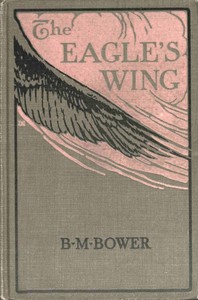
Path 1: The Dime Novel Tradition — Begin with Nick Carter's The Photographer's Evidence (cat. 1), then read Prentiss Ingraham's Buffalo Bill's Still Hunt (cat. 1), and conclude with Albert W. Aiken's The Rival Trappers (cat. 1) to trace the evolution of popular adventure fiction. Path 2: Early 20th-Century Detective Stories — Start with Agatha Christie's The Plymouth Express Affair (cat. 3), contrast with Baroness Orczy's Unravelled Knots (cat. 3), and finish with Freeman Wills Crofts's Inspector French's Greatest Case (cat. 3). Path 3: Social Realism in Four Categories — Compare Pearl S. Buck's The Mother (cat. 1), B. M. Bower's The Eagle's Wing (cat. 2), Ellen Glasgow's Barren Ground (cat. 3), and Virginia Woolf's Mrs Dalloway in Bond Street (cat. 4) to observe how different categories frame social and psychological themes.
Bibliographic dates and catalogue measurements
The catalogue distinguishes the Project Gutenberg digital release from a work’s original or first publication. Project Gutenberg is identified as the digital source for the edition available here; its release year is therefore shown as Gutenberg Release Year, not as the work’s original publication year.
When an explicit first-publication or issue date can be supported directly by the title or issue information, it may be shown separately as First Publication Year. When that date cannot be confirmed, the catalogue displays Not confirmed rather than guessing a year.
Where the source text can be measured reliably, the catalogue may provide word count and estimated reading time. These measurements describe reading scope and are not quality rankings.
The current catalogue contains 4 active subject categories: Adventure Picaresque Fiction, Fantasy Juvenile Worlds, Science Fiction Utopias, and Historical Psychological Social Fiction. Categories are browsing aids and may overlap where a work reasonably fits more than one subject.
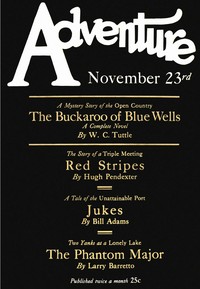
- Featured