About 210 minutes
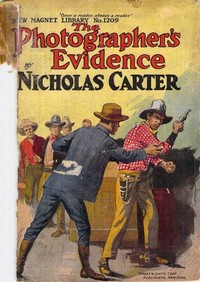
The Photographer's Evidence; Or, Clever but Crooked — Reading Companion
Adventure Picaresque Fiction
48,284 recorded words. 11 minutes difference from this book's estimate.
View Gutenberg source #62010
Before opening The fortunes of Fifi — Edition Insights, the edition data offers a quick orientation: 50,692 words, 3 hr 41 min estimated reading time, and 16 detected text sections.
The text analysis averages about 21.0 words per sentence, while the detected sections provide another way to judge how the source is divided.
Project Gutenberg metadata also associates the work with “Mate selection -- Fiction,” connecting these edition facts with the source record’s subject description.
Explore this collection
These alternatives are selected using recorded categories and estimated reading time.
About 210 minutes
Adventure Picaresque Fiction
48,284 recorded words. 11 minutes difference from this book's estimate.
View Gutenberg source #62010About 203 minutes
Adventure Picaresque Fiction
46,521 recorded words. 18 minutes difference from this book's estimate.
View Gutenberg source #63864About 239 minutes
Adventure Picaresque Fiction
54,762 recorded words. 18 minutes difference from this book's estimate.
View Gutenberg source #68919Search stored excerpts and compare books → Choose by your preferences →
Choices use stored catalog measurements. Estimates vary with reading speed. A shared category is a catalog label, not a claim that two books have the same argument or literary quality.
Search reads excerpt text stored with this catalog and links to its associated Gutenberg record. The connection is stored in the site database; this tool does not recheck that every excerpt is word-for-word identical to that external record. Excerpt search does not cover every chapter and does not verify historical publication dates.
Catalog snapshot checked: 2026-09-25. Coverage: 92 public books, 92 available source excerpts.
Calculated from edition completeness, EPUB availability, text structure and catalogue metadata. Not a user rating.
Total of 100 points, scaled to a 2.5-5.0 range. Editions with an empty description or a missing EPUB file are not scored.
Public-domain source text
The source text is kept in the dedicated reader, separate from this catalogue record and its commentary.
Molly Elliot Seawell opens The Fortunes of Fifi with a precise sense of place: the November night descends on the Rue du Chat Noir, where three yellow flickering lamps hang on a rope. The Imperial Theater, with its gaudy red lamps and decaying plaster ornaments, is introduced as a venue where the word “Imperial” carries weight in 1804. The dialogue between Cartouche and Fifi establishes a brisk, theatrical voice—Cartouche’s stern warnings and Fifi’s laughing replies reveal character through speech. Seawell’s narration often shifts into a knowing, slightly ironic tone, as when she describes Fifi’s promotion to leading lady with a salary of twenty-five francs a week.
Seawell’s diction in the opening chapter is carefully chosen to evoke the world of a small Parisian theater. Words like “harangued,” “gaudy,” and “rickety” establish a setting that is both vivid and slightly shabby. The dialogue is peppered with theatrical jargon—Cartouche refers to Fifi as “leading lady” and compares her to “Mademoiselle Mars at the House of Molière.” This language grounds the reader in the specific social hierarchy of the Imperial Theater. Seawell also uses colloquial interjections: Fifi’s “Ah, Cartouche!” and Cartouche’s repeated “No flirtations” give the exchanges a natural, almost performative rhythm. The narrator’s own voice occasionally adopts a wry formality, as in the observation that “Imperial was a great word in Paris in the month of November, 1804.” This blend of period-appropriate vocabulary and conversational ease creates a distinctive narrative texture.
Seawell uses dialogue not just to advance plot but to define her characters through their speech patterns. Cartouche’s lines are direct and admonitory: “Now, Fifi, don’t get it into your head… that you are Mademoiselle Mars.” His tone is protective yet stern, revealing his role as a mentor. Fifi’s responses are brief and playful—“No, I won’t”—showing her independence and lack of pretension. Later, in the dress shop scene, Fifi’s speech becomes theatrical and strategic: “It will answer my purpose exactly,” she declares, and “I think this will finish him.” The shopkeepers’ dialogue is obsequious and commercial, contrasting with Fifi’s calculated exuberance. Seawell also uses indirect dialogue to convey inner thoughts, as when Fifi “gravely examining herself in the glass, declared she was charmed.” This layering of spoken and unspoken motives enriches the character dynamics.
Seawell’s descriptive passages are notable for their visual detail and comic exaggeration. The costume Fifi selects is described with almost absurd specificity: “a staring yellow brocade, with large purple flowers,” intended for a woman “nine feet high and three feet broad.” The hat is a “nightmare” of flowers, beads, ribbons, and feathers. The cloak is “a stupendous stripe of red and green satin” that might have served as a gridiron. These descriptions are not merely decorative; they serve the narrative by illustrating Fifi’s deliberate provocation. Seawell’s prose often includes a dry, observational humor: “Fifi paraded solemnly up and down before the large swinging mirror, surveying herself. She was a quaint object… and she knew it.” The author’s choice to linger on these details—the huge flower covering Fifi’s back, the train trailing a yard—creates a vivid, almost cinematic image while advancing the theme of performance.
Seawell employs a third-person narrator who is both omniscient and subtly ironic. The narrative voice frequently comments on the action with a knowing tone: “And then began the comedy, so often enacted in the world, of the cunning hypocrite being unconsciously the dupe of the supposed victim.” This meta-commentary frames the events as a kind of theatrical performance. The structure of the opening chapter moves from establishing setting to dialogue to action, with descriptive passages interspersed. Seawell also uses chapter titles that hint at content—“The Imperial Theater,” “Number 1313,” “The Grand Prize”—but the excerpts show a preference for scene-by-scene progression over summary. The author’s choice to begin in medias res with Cartouche’s harangue immediately immerses the reader in the world of the theater, while the later dress shop scene demonstrates a shift to a more leisurely, comic pace.
Readers attentive to Seawell’s craft will notice how she balances period detail with a light, ironic touch. The novel’s humor often arises from the gap between Fifi’s schemes and the narrator’s dry commentary. Pay particular attention to how dialogue and description work together to reveal character—Fifi’s words and costumes are both performances. The excerpts suggest a story that values wit and visual comedy over sentiment, though the incomplete text leaves the full arc of Fifi’s fortunes uncertain.
I've always liked how Seawell's Fifi understands that a costume is a kind of conversation—a quiet argument with the world. There's a similar patience in the old Bulldog, that steady companion on the shelf. Bulldog — Inside the Classic feels like a familiar friend, sharing that same careful attention to how characters present themselves. A gentle echo, I think.
Your answers remain private and are stored only in this browser.