About 203 minutes
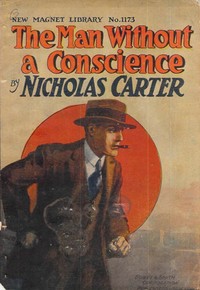
The Man Without a Conscience; Or, From Rogue to Convict — Inside the Classic
Adventure Picaresque Fiction
46,521 recorded words. 7 minutes difference from this book's estimate.
View Gutenberg source #63864
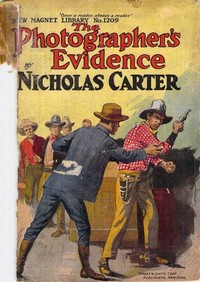
The catalog record for The Photographer's Evidence; Or, Clever but Crooked — Reading Companion provides practical reading context through 48,284 words, 3 hr 30 min estimated reading time, and 33 detected text sections.
The text analysis averages about 14.1 words per sentence, while the detected sections provide another way to judge how the source is divided.
Project Gutenberg metadata also associates the work with “Detective and mystery stories,” connecting these edition facts with the source record’s subject description.
Explore this collection
These alternatives are selected using recorded categories and estimated reading time.
About 203 minutes
Adventure Picaresque Fiction
46,521 recorded words. 7 minutes difference from this book's estimate.
View Gutenberg source #63864About 221 minutes
Adventure Picaresque Fiction
50,692 recorded words. 11 minutes difference from this book's estimate.
View Gutenberg source #68758About 239 minutes
Adventure Picaresque Fiction
54,762 recorded words. 29 minutes difference from this book's estimate.
View Gutenberg source #68919Search stored excerpts and compare books → Choose by your preferences →
Choices use stored catalog measurements. Estimates vary with reading speed. A shared category is a catalog label, not a claim that two books have the same argument or literary quality.
Search reads excerpt text stored with this catalog and links to its associated Gutenberg record. The connection is stored in the site database; this tool does not recheck that every excerpt is word-for-word identical to that external record. Excerpt search does not cover every chapter and does not verify historical publication dates.
Catalog snapshot checked: 2026-09-25. Coverage: 92 public books, 92 available source excerpts.
Calculated from edition completeness, EPUB availability, text structure and catalogue metadata. Not a user rating.
Total of 100 points, scaled to a 2.5-5.0 range. Editions with an empty description or a missing EPUB file are not scored.
Public-domain source text
The source text is kept in the dedicated reader, separate from this catalogue record and its commentary.
The Photographer's Evidence; Or, Clever but Crooked opens not with a crime scene but with a problem of publicity. When Nick Carter arrives in Denver, he learns that his presence has been announced to fifty men before he even steps off the train. The detective's immediate concern is not the murder case itself but the fact that his cover is blown. He instructs his client Folsom and local detective Kerr to return separately while he and his assistant Patsy linger in the station, pretending to consult a timetable and buy a newspaper. This opening establishes a central tension: the work of detection is as much about managing information as about gathering clues.
The excerpt from Chapter XI shows Carter reacting to a compromised arrival with characteristic indirection. He tells Folsom, “I’ll bet the cigars that more than Mr. Kerr know,” and learns that the summons was discussed openly. Rather than proceed directly to the hotel, Carter splits the party: Folsom and Kerr return alone, while Carter and Patsy linger to observe. Patsy reports having “spotted every man who had been in sight since we stepped off the train”—about a dozen. This moment turns the station into a surveillance set piece, where the detectives watch the watchers. The strategy is explicit: if the guilty man was among the fifty, he would shadow Folsom and Kerr, then wait to see what Carter does. By pretending to be casual—buying a cigar, consulting a timetable—Carter forces any follower to reveal himself. The scene is a compact demonstration of the series’ method: action is filtered through layers of observation and counter-observation.
The prose is brisk and functional, with short paragraphs and frequent dialogue. Sentences like “Nick smiled, and glanced at Folsom” carry the narrative forward without psychological depth. The voice is that of an omniscient narrator who reports actions and speech but rarely interior states. This aligns with the dime novel’s demand for rapid pacing. The chapter structure—each titled and numbered—breaks the story into digestible segments, often ending on a note of suspense or a decision to move. The table of contents lists sixteen chapters with titles like “A Doubtful Client” and “Patsy’s Dancing Lesson,” suggesting a mix of procedural and action elements. The catalog subjects classify the work as both detective fiction and popular literature, and the text bears out that dual identity: it is a mystery that moves quickly, relying on dialogue and movement rather than forensic detail.
Despite the title’s promise of photographic evidence, the excerpt focuses on a different kind of proof: the alibi and the witness. Detective Kerr says they cannot act until a messenger boy returns with a piece of evidence. The phrase “the messenger boy’s evidence” is vague, and the narrative does not specify what it is. This delay structures the chapter: Carter agrees to dinner in a private room while they wait. The evidence is not yet in hand, and the investigation is stalled. This is typical of the series’ plotting—clues are introduced but held back to maintain tension. The reader, like the detectives, must wait. The title’s “photographer’s evidence” may refer to a later revelation, but in the opening chapters, the evidentiary process is social and temporal: who knows what, and when. The catalog subject “detective and mystery stories” fits, but the excerpt shows that the mystery is as much about procedure as about the crime itself.
Readers should note that the excerpt covers only the early stages of the Denver case. The narrative voice is consistent with the Nick Carter series: efficient, dialogue-driven, and focused on the detective’s control of information. The title’s reference to photography may become significant later, but in these pages, evidence is verbal and circumstantial. The story rewards attention to who speaks when and what is left unsaid.
There’s something lonely about Nick Carter stepping off that train in Denver, fifty pairs of eyes already marking him. I kept thinking how a crowd can be the loudest kind of silence. It reminded me of the quiet unease in The Phantom Regiment; or, Stories of "Ours" — Context and Discussion, where belonging itself feels like a disguise. We watch, and we are watched.
Use these questions to collect your thoughts before moving on.