About 288 minutes
Buffalo Bill's Still Hunt; Or, The Robber of the Range — Inside the Classic
Adventure Picaresque Fiction
66,060 recorded words. 12 minutes difference from this book's estimate.
View Gutenberg source #64800
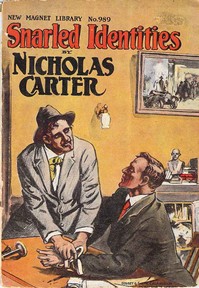
For A Sharper's Downfall; Or, Into the Net — Inside the Classic, the stored edition analysis reports 68,897 words, 5 hr estimated reading time, and 8 detected text sections.
The text analysis averages about 16.4 words per sentence, while the detected sections provide another way to judge how the source is divided.
Project Gutenberg metadata also associates the work with “Detective and mystery stories,” connecting these edition facts with the source record’s subject description.
Explore this collection
These alternatives are selected using recorded categories and estimated reading time.
About 288 minutes
Adventure Picaresque Fiction
66,060 recorded words. 12 minutes difference from this book's estimate.
View Gutenberg source #64800About 279 minutes
Adventure Picaresque Fiction
64,073 recorded words. 21 minutes difference from this book's estimate.
View Gutenberg source #64080About 278 minutes
Adventure Picaresque Fiction
63,749 recorded words. 22 minutes difference from this book's estimate.
View Gutenberg source #63977Search stored excerpts and compare books → Choose by your preferences →
Choices use stored catalog measurements. Estimates vary with reading speed. A shared category is a catalog label, not a claim that two books have the same argument or literary quality.
Search reads excerpt text stored with this catalog and links to its associated Gutenberg record. The connection is stored in the site database; this tool does not recheck that every excerpt is word-for-word identical to that external record. Excerpt search does not cover every chapter and does not verify historical publication dates.
Catalog snapshot checked: 2026-09-25. Coverage: 92 public books, 92 available source excerpts.
Calculated from edition completeness, EPUB availability, text structure and catalogue metadata. Not a user rating.
Total of 100 points, scaled to a 2.5-5.0 range. Editions with an empty description or a missing EPUB file are not scored.
Public-domain source text
The source text is kept in the dedicated reader, separate from this catalogue record and its commentary.
From its opening chapters, A Sharper's Downfall; Or, Into the Net establishes a brisk, conversational rhythm. The dialogue moves in quick exchanges, often with characters interrupting or overlapping—Chick's “Sure” after Nick's emphatic nod, for instance. This verbal pace mirrors the detective work: rapid assessments, swift decisions. The narrative voice, while third-person, stays close to Nick Carter's perspective, filtering events through his observations and quiet authority. The prose is efficient, rarely pausing for description unless it serves the plot. A wedding reception becomes a stage for surveillance, and the language shifts from lighthearted banter to clipped, tactical instructions as the threat of theft emerges.
The dialogue in the excerpt is notably lean. Characters speak in short, declarative sentences: “Do so,” “Sure,” “It is not too late.” This economy extends to the narration, which favors action verbs and minimal adjectives. When Mr. Sanborn confesses he has “done nothing but blunder,” the detectives respond with laughter—not mockery, but a shared professional amusement. The voice remains consistent: Nick Carter speaks with measured confidence, Chick with blunt practicality. The author avoids ornate description; even the screen behind which Nick hides is described only as “large and costly,” enough to serve the plot. This verbal restraint keeps the focus on the unfolding scheme.
The excerpt begins at a leisurely pace: Mr. Sanborn laughs at his own inexperience, and the detectives tease him gently. But the rhythm tightens when Nick telephones Patsy and Ida, issuing terse instructions. The arrival of a card from the “Chief of the Detective Bureau” marks a sharper turn. Nick's repeated interruptions—“Wait one moment,” “Don’t be so hasty”—accelerate the tension. The screen is drawn, and the reader is placed in a hidden vantage point. This structural shift from open conversation to concealed observation mirrors the detective's own method: the pace slows again as Nick waits, listening. The story moves between social comedy and suspense without jarring, each change signaled by a change in dialogue length or narrative focus.
Several details recur in the excerpt: the telephone as a tool of coordination, the emphasis on proper dress (Patsy told to dress “as if he were going to a fashionable morning wedding”), and the motif of protection. Mr. Sanborn's initial failure to secure the wedding gifts introduces a theme of vulnerability masked by wealth. Nick's remark that the Detective Bureau usually “come to ask what provisions you desire” hints at a professional code—one the sharper (the con man) will exploit. The screen, a domestic object repurposed for surveillance, encapsulates the story's interest in hidden observation. These details are not merely decorative; they build a world where appearances are managed and trust is provisional.
Readers should attend to the way the author uses dialogue to signal shifts in power. When Nick speaks, his sentences often carry implicit commands; when Mr. Sanborn speaks, he hesitates. The novel's title promises a downfall, and the early chapters plant the means—disguise, timing, and the exploitation of social rituals. The pace will likely quicken as the net closes, but the foundation is laid in these quiet, conversational moments.
There’s a particular comfort in watching Nick Carter’s shifting disguises, knowing the thieves never stand a chance. That same unhurried warmth, where the sea’s comedy hides a steadier current, lives on in The promotion of the admiral, and other sea comedies — Reading Notes. Both feel like old friends, their laughter followed by a quiet, knowing pause.
Save your reaction, strongest insight, and memorable passage.