About 253 minutes
The Plot That Failed; or, When Men Conspire — Themes and Context
Adventure Picaresque Fiction
58,158 recorded words. 14 minutes difference from this book's estimate.
View Gutenberg source #66863
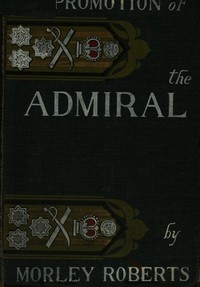
For The promotion of the admiral, and other sea comedies — Reading Notes, the stored edition analysis reports 54,762 words, 3 hr 59 min estimated reading time, and 5 detected text sections.
The text analysis averages about 14.2 words per sentence, while the detected sections provide another way to judge how the source is divided.
Project Gutenberg metadata also associates the work with “Short stories, English,” connecting these edition facts with the source record’s subject description.
Explore this collection
These alternatives are selected using recorded categories and estimated reading time.
About 253 minutes
Adventure Picaresque Fiction
58,158 recorded words. 14 minutes difference from this book's estimate.
View Gutenberg source #66863About 221 minutes
Adventure Picaresque Fiction
50,692 recorded words. 18 minutes difference from this book's estimate.
View Gutenberg source #68758About 210 minutes
Adventure Picaresque Fiction
48,284 recorded words. 29 minutes difference from this book's estimate.
View Gutenberg source #62010Search stored excerpts and compare books → Choose by your preferences →
Choices use stored catalog measurements. Estimates vary with reading speed. A shared category is a catalog label, not a claim that two books have the same argument or literary quality.
Search reads excerpt text stored with this catalog and links to its associated Gutenberg record. The connection is stored in the site database; this tool does not recheck that every excerpt is word-for-word identical to that external record. Excerpt search does not cover every chapter and does not verify historical publication dates.
Catalog snapshot checked: 2026-09-25. Coverage: 92 public books, 92 available source excerpts.
Calculated from edition completeness, EPUB availability, text structure and catalogue metadata. Not a user rating.
Total of 100 points, scaled to a 2.5-5.0 range. Editions with an empty description or a missing EPUB file are not scored.
Public-domain source text
The source text is kept in the dedicated reader, separate from this catalogue record and its commentary.
Morley Roberts opens his collection with a portrait of Shanghai Smith, a San Francisco boarding-house keeper whose reputation for cunning and brutality precedes him across the Pacific. The narrator describes Smith as having 'the bull-headed courage of a mad steer combined with the wicked cunning of a monkey,' establishing a tone of wry exaggeration that persists throughout the stories. Smith's dialogue—'Say it and mean it, that's me'—reveals a character who thrives on confrontation and self-aggrandizement. Roberts's prose moves between detached summary and vivid, colloquial speech, creating a rhythm that mirrors the unpredictable life of sailors ashore and at sea.
Roberts relies heavily on dialogue to define his characters, often letting them condemn themselves through their own words. Shanghai Smith's boastful threats—'Don't never play upon me, for get even is my motter'—paint him as a man who values reputation above all. In later stories, the speech patterns shift: the mate Simpkins uses a rough, paternal tone ('Blimy, we'll 'ave 'er sailin' like a witch yet'), while the scientists speak in formal, hesitant phrases. The contrast between the sailors' blunt commands and the intellectuals' polite protests heightens the comedy of mismatched expectations. Roberts rarely uses interior monologue; instead, he lets action and dialogue carry the narrative forward, giving the stories a theatrical quality.
The excerpts show Roberts varying pace by alternating between rapid-fire exchanges and extended descriptions of physical labor. In 'The Crew of the Kamma Funder,' the scientists are forced to pump and throw lumber overboard, and the narrative slows to detail their exhaustion: 'the astronomer and entomologist pumped for their lives.' Then the pace quickens with Simpkins's orders and the captain's roaring. Roberts also uses repetition for comic effect—the captain's repeated threats to 'make sailors' of the scientists build a rhythm of escalating absurdity. The physical comedy of learned men struggling with manual tasks is underscored by the narrator's deadpan delivery, which never openly mocks but lets the situation speak for itself.
Roberts anchors his stories in specific, gritty settings that shape the characters' behavior. The Barbary Coast boarding-house is described as a place where 'any drunken scallawag of a scholar' might be knocked unconscious with a match-box. The shipboard scenes emphasize confinement and danger: the waterlogged barque, the leaking pumps, the 'whitening' sea of floating lumber. These details create a sense of immediate physical threat that contrasts with the farcical elements. Roberts does not romanticize the sea; instead, he presents it as a harsh environment that exposes incompetence and tests resolve. The setting functions almost as a character, forcing the scientists and sailors alike into uncomfortable proximity and driving the plot through practical necessity.
Readers approaching this collection should attend to the way Roberts balances satire with sympathy. His characters are often ridiculous, but their struggles with authority, survival, and dignity are treated with a straight-faced humor that rewards close attention to dialogue and pacing. The stories benefit from being read in sequence, as recurring types and situations build a coherent comic world.
That rainy afternoon, I kept returning to Roberts’s cantankerous sailors, their bluster masking a deeper weariness. Closing the book, I noticed another volume on the shelf, its spine faded. Flipping it open to a random page, I found that same salty, grudging resignation waiting for me there. Red stripes — Reading Notes felt familiar, as if Roberts’s characters had simply walked into a different story.
Save your reaction, strongest insight, and memorable passage.