About 239 minutes
The promotion of the admiral, and other sea comedies — Reading Notes
Adventure Picaresque Fiction
54,762 recorded words. 14 minutes difference from this book's estimate.
View Gutenberg source #68919
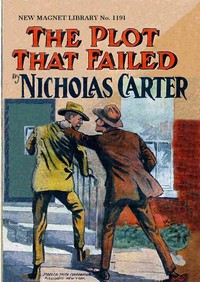
For The Plot That Failed; or, When Men Conspire — Themes and Context, the stored edition analysis reports 58,158 words, 4 hr 13 min estimated reading time, and 30 detected text sections.
The text analysis averages about 13.8 words per sentence, while the detected sections provide another way to judge how the source is divided.
Project Gutenberg metadata also associates the work with “Detective and mystery stories,” connecting these edition facts with the source record’s subject description.
Explore this collection
These alternatives are selected using recorded categories and estimated reading time.
About 239 minutes
Adventure Picaresque Fiction
54,762 recorded words. 14 minutes difference from this book's estimate.
View Gutenberg source #68919About 278 minutes
Adventure Picaresque Fiction
63,749 recorded words. 25 minutes difference from this book's estimate.
View Gutenberg source #63977About 279 minutes
Adventure Picaresque Fiction
64,073 recorded words. 26 minutes difference from this book's estimate.
View Gutenberg source #64080Search stored excerpts and compare books → Choose by your preferences →
Choices use stored catalog measurements. Estimates vary with reading speed. A shared category is a catalog label, not a claim that two books have the same argument or literary quality.
Search reads excerpt text stored with this catalog and links to its associated Gutenberg record. The connection is stored in the site database; this tool does not recheck that every excerpt is word-for-word identical to that external record. Excerpt search does not cover every chapter and does not verify historical publication dates.
Catalog snapshot checked: 2026-09-25. Coverage: 92 public books, 92 available source excerpts.
Calculated from edition completeness, EPUB availability, text structure and catalogue metadata. Not a user rating.
Total of 100 points, scaled to a 2.5-5.0 range. Editions with an empty description or a missing EPUB file are not scored.
Public-domain source text
The source text is kept in the dedicated reader, separate from this catalogue record and its commentary.
This Nick Carter story opens not with a crime in progress but with a puzzle already in place: a man has been murdered, yet his body has disappeared. The detective's first interview with a servant, Joe Timon, establishes the central mystery—a locked room, masked intruders, and a witness who heard conspiratorial whispers. The narrative voice is brisk and procedural, with Nick Carter pacing the floor and growling under his breath, signaling a case that defies his experience. The excerpts show a story driven by interrogation and logical inference rather than physical action, a hallmark of the dime-novel detective genre.
The excerpts center on a single, unresolved question: was a murder committed if no body can be found? Nick Carter's exchange with the servant Timon reveals that the victim, Mr. Field, was seen alive after the supposed murder, then the body vanished. The detective muses that “without the presence of a dead body this was impossible to say” whether murder had occurred. This focus on evidentiary gaps—rather than on a chase or confrontation—gives the story a cerebral quality. The narrative lingers on the servant's account of being tied up by masked men, but the actual crime remains offstage. The reader, like Carter, is left to piece together clues from testimony alone.
The longest excerpt is a sustained interrogation of Joe Timon, the servant who may have been the last to see Field alive. Timon's account is detailed but inconclusive: he went to bed early with a headache, was awakened by footsteps, heard fragments of conversation (“it was unfortunate that they had not been able to get out undetected”), and was then bound by masked intruders. Carter questions him sharply, pressing for specifics about timing, visibility, and the servants' reliability. The scene functions as a miniature detective procedure, with each answer raising new questions. The prose is lean, relying on dialogue and short paragraphs to build tension without melodrama.
The catalog lists this work under “Detective and mystery stories; Dime novels; American fiction.” The excerpts confirm the detective-story label: Nick Carter is the focal point, and the plot revolves around a crime and its investigation. However, the “dime novel” category often implies fast-paced action, while these excerpts are notably static—the action is all retrospective, reported through dialogue. The “American fiction” tag is accurate but broad. Notably absent from the excerpts is any sense of the series' typical sensationalism; the tone is restrained, almost clinical. Readers expecting a thriller may find a more measured, puzzle-oriented narrative than the genre's reputation suggests.
Readers approaching this Nick Carter entry should expect a story that prioritizes deduction over derring-do. The excerpts suggest a locked-room mystery built on testimony and inference, with the detective's reasoning taking center stage. The absence of the victim's body is not just a plot point but a structural device that keeps the narrative focused on the process of detection. Those interested in early procedural fiction will find this a compact example of the form.
There’s something touching about how the detective’s empty room holds its silence, the vanished body almost a ghost of a plot. It reminded me of how absence shapes a story, much like it does in The mother — Background and Themes, where what isn’t said carries its own weight. I suppose mystery was always that way.
Answer a few questions and save a private reflection on this device.