About 210 minutes
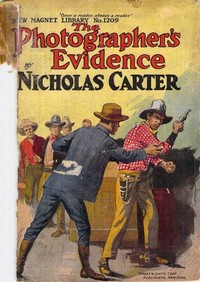
The Photographer's Evidence; Or, Clever but Crooked — Reading Companion
Adventure Picaresque Fiction
48,284 recorded words. 7 minutes difference from this book's estimate.
View Gutenberg source #62010
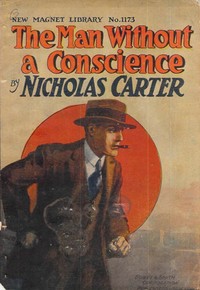
Before opening The Man Without a Conscience; Or, From Rogue to Convict — Inside the Classic, the edition data offers a quick orientation: 46,521 words, 3 hr 23 min estimated reading time, and 27 detected text sections.
The text analysis averages about 14.9 words per sentence, while the detected sections provide another way to judge how the source is divided.
Project Gutenberg metadata also associates the work with “Detective and mystery stories,” connecting these edition facts with the source record’s subject description.
Explore this collection
These alternatives are selected using recorded categories and estimated reading time.
About 210 minutes
Adventure Picaresque Fiction
48,284 recorded words. 7 minutes difference from this book's estimate.
View Gutenberg source #62010About 221 minutes
Adventure Picaresque Fiction
50,692 recorded words. 18 minutes difference from this book's estimate.
View Gutenberg source #68758About 174 minutes
Adventure Picaresque Fiction
39,921 recorded words. 29 minutes difference from this book's estimate.
View Gutenberg source #67169Search stored excerpts and compare books → Choose by your preferences →
Choices use stored catalog measurements. Estimates vary with reading speed. A shared category is a catalog label, not a claim that two books have the same argument or literary quality.
Search reads excerpt text stored with this catalog and links to its associated Gutenberg record. The connection is stored in the site database; this tool does not recheck that every excerpt is word-for-word identical to that external record. Excerpt search does not cover every chapter and does not verify historical publication dates.
Catalog snapshot checked: 2026-09-25. Coverage: 92 public books, 92 available source excerpts.
Calculated from edition completeness, EPUB availability, text structure and catalogue metadata. Not a user rating.
Total of 100 points, scaled to a 2.5-5.0 range. Editions with an empty description or a missing EPUB file are not scored.
Public-domain source text
The source text is kept in the dedicated reader, separate from this catalogue record and its commentary.
The catalog subjects for this Nick Carter dime novel list “Detective and mystery stories” and “Popular literature,” but the excerpts reveal a work that is as much about the mechanics of detection as it is about the atmosphere of suspicion. The opening chapter, “An Inquisitive Clerk,” introduces a minor character, Sandy Hyde, whose “catlike eyes” and furtive actions—closing doors and peering through lattices—create a sense of pervasive surveillance. This focus on the clerk’s perspective, rather than the detective’s, suggests that the mystery may hinge on the watcher being watched.
The excerpts devote considerable attention to Mr. Sandy Hyde, a clerk whose “brick-hued head” and “catlike eyes” mark him as untrustworthy. When Nick Carter enters the police office, the narrative shifts to Hyde’s point of view: he “dropped his pen, and came down from his stool” to close doors, his eyes “burned more greenishly bright and intense.” This is not typical detective-story focus; the suspect’s actions are described in greater sensory detail than the hero’s. The catalog subject “detective and mystery stories” might lead a reader to expect Nick Carter’s deductions to drive the plot, but here the clerk’s covert behavior is given equal weight, hinting that the story may be as interested in the criminal’s psychology as in the detective’s method.
The backstory of Madame Victoria, a fortune-teller, is delivered through a broker’s gossip: both she and her sister were “born in England, the daughters of a second-rate actor,” and worked in “the show business” as “an alleged gipsy fortune-teller, now as a palmist, at other times an astrologer.” This information is presented as hearsay, not verified fact, and the broker “positively assured” Nick that both women were “little more than adventuresses of a rather disreputable type.” The catalog subject “popular literature” often includes such sensational character sketches, but the text’s reliance on secondhand testimony creates ambiguity. The reader cannot be certain whether Madame Victoria is a genuine criminal or a victim of reputation, a nuance that the catalog’s broad categories do not capture.
The table of contents lists twenty chapters with titles like “Nick Carter Held Up” and “The Escape,” suggesting an episodic, action-driven structure typical of dime novels. However, the excerpts show that the narrative also lingers on mundane details: Nick returns reports, retains a photograph, and exchanges polite greetings with Chief Weston. The catalog subject “dime novels” implies fast-paced, formulaic storytelling, but the text’s pacing is uneven—long passages of exposition (the sisters’ history) interrupt the action. This tension between the expected dime-novel rhythm and the actual text’s digressions may reflect the constraints of serial publication, where each installment needed to balance plot advancement with character development.
Readers approaching this work through its catalog subjects should be prepared for a story that does not always conform to genre expectations. The detective’s methods are understated, the criminal’s perspective is foregrounded, and the plot advances through conversation as much as through action. Pay attention to minor characters like Sandy Hyde, whose seemingly incidental role may prove central, and consider how the novel’s serialized origins shape its digressive structure.
Rereading the editorial notes on that old Nick Carter tale, I found myself thinking of Sandy Hyde’s uneasy evasions, and how identities slip through our fingers like water. It reminded me of another tangled story where deception felt less like plotting and more like drift. There’s a quiet kinship there, in what we choose to hide. Snarled Identities; Or, A Desperate Tangle — Context and Discussion lingers in my mind the same way.
Your answers remain private and are stored only in this browser.