About 361 minutes
The mother — Background and Themes
Adventure Picaresque Fiction
82,965 recorded words. 28 minutes difference from this book's estimate.
View Gutenberg source #68577
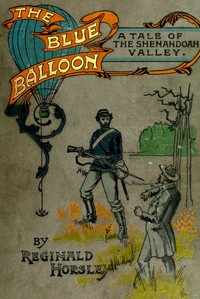
This digital edition of The Blue Balloon: A Tale of the Shenandoah Valley — Key Ideas to Explore is described by source-level measurements including 76,547 words, 5 hr 33 min estimated reading time, and 20 detected text sections.
The text analysis averages about 15.2 words per sentence, while the detected sections provide another way to judge how the source is divided.
Project Gutenberg metadata also associates the work with “United States -- History -- Civil War, 1861-1865 -- Fiction,” connecting these edition facts with the source record’s subject description.
Explore this collection
These alternatives are selected using recorded categories and estimated reading time.
About 361 minutes
Adventure Picaresque Fiction
82,965 recorded words. 28 minutes difference from this book's estimate.
View Gutenberg source #68577About 300 minutes
Adventure Picaresque Fiction
68,897 recorded words. 33 minutes difference from this book's estimate.
View Gutenberg source #66718About 375 minutes
Adventure Picaresque Fiction
86,235 recorded words. 42 minutes difference from this book's estimate.
View Gutenberg source #62963Search stored excerpts and compare books → Choose by your preferences →
Choices use stored catalog measurements. Estimates vary with reading speed. A shared category is a catalog label, not a claim that two books have the same argument or literary quality.
Search reads excerpt text stored with this catalog and links to its associated Gutenberg record. The connection is stored in the site database; this tool does not recheck that every excerpt is word-for-word identical to that external record. Excerpt search does not cover every chapter and does not verify historical publication dates.
Catalog snapshot checked: 2026-09-25. Coverage: 92 public books, 92 available source excerpts.
Calculated from edition completeness, EPUB availability, text structure and catalogue metadata. Not a user rating.
Total of 100 points, scaled to a 2.5-5.0 range. Editions with an empty description or a missing EPUB file are not scored.
Public-domain source text
The source text is kept in the dedicated reader, separate from this catalogue record and its commentary.
Reginald Horsley opens The Blue Balloon with a narrator who sets the historical stage in May 1862, noting that the Federals' boast of finishing the war in ninety days had proven empty. The prose then shifts to a tense encounter between a sentry, Ephraim, and a stranger who demands passage. Ephraim's dialect—'Who air yew orderin' about?'—immediately establishes a regional voice, while the stranger's smooth, conciliatory tone creates a contrast that drives the scene's suspense. Horsley's dialogue reveals character through word choice and rhythm, not exposition.
Ephraim's speech is thick with nonstandard spellings and contractions: 'yew' for 'you,' 'hyar' for 'here,' 'tew' for 'to,' and 'enuff' for 'enough.' This is not mere decoration; it signals his rural, uneducated background and his stubborn independence. When the stranger offers a bribe, Ephraim replies, 'Thet's enough! Thet about sizes yew, I should say.' The dialect here underscores his moral rigidity—he cannot be bought. In contrast, the stranger's language is standard and polished, but his attempts at conciliation ('Look here, my good friend') ring hollow. Horsley uses these linguistic differences to externalize the power struggle between the two men, making the sentry's eventual triumph feel earned through verbal grit rather than physical force.
The blue balloon of the title appears only in chapters III and IV, but its function is pivotal. Horsley describes its ascent with technical precision: 'Ephraim, his feet twined among the cordage, slowly mounted towards the network.' The balloon is not a magical object but a piece of military technology, used for reconnaissance. Its color—blue—may hint at Union affiliation, though the text does not confirm this. The balloon's brief presence creates a vertical axis in the story, lifting characters above the valley floor and offering a literal and figurative vantage point. After it comes down, the narrative returns to ground-level intrigue, suggesting that Horsley uses the balloon as a catalyst rather than a sustained symbol.
Horsley builds tension through repeated standoffs. In the excerpt, Ephraim and the stranger escalate from verbal sparring to a drawn revolver. The author controls pacing with short, clipped lines: 'Quit, I say.' 'Let me pass, or take the consequences.' The physical details—'the glancing bayonet swept upwards, met the dull blue tube with a clank'—anchor the confrontation in concrete action. This pattern recurs in later chapters (e.g., 'A Duel in the Dark'), suggesting that Horsley favors moments of suspended violence over prolonged battle scenes. The standoffs serve as microcosms of the larger conflict, where personal will and quick judgment decide outcomes.
Though the excerpts provide limited landscape description, the title and chapter headings root the story firmly in the Shenandoah Valley. The valley was a strategic corridor during the Civil War, and Horsley uses it as a stage for movement and concealment. The sentry's post, the balloon's ascent, and the interception of dispatches all depend on the valley's geography—its ridges, rivers, and roads. The author does not linger on scenery; instead, he implies terrain through action: the balloon goes up to see, the sentry blocks a path, a boat is brought ashore. This functional treatment of setting keeps the focus on human decisions under pressure.
Readers will find that Horsley's novel rewards attention to dialogue and pacing rather than historical sweep. The author's choices in dialect, standoff structure, and limited use of the titular balloon create a tight, character-driven adventure. Approach the text as a series of tactical encounters where words are as sharp as bayonets.
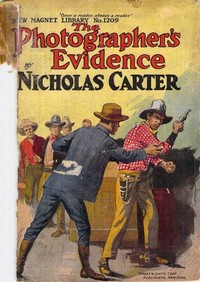
Reading about Ephraim’s stubborn watchfulness in The Blue Balloon, I found myself thinking of another old tale where a soldier’s cleverness hides a crooked heart. Something about those tense standoffs feels familiar, a quiet echo of how carefully we measure trust. That brought back The Photographer's Evidence; Or, Clever but Crooked — Reading Companion, whose own deceptions linger softly in memory.
Save your reaction, strongest insight, and memorable passage.