About 279 minutes
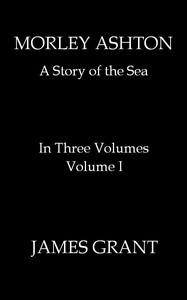
Morley Ashton: A Story of the Sea. Volume 1 (of 3) — Context and Discussion
Adventure Picaresque Fiction
64,073 recorded words. 1 minutes difference from this book's estimate.
View Gutenberg source #64080
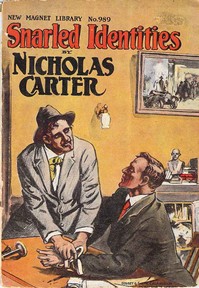
For Snarled Identities; Or, A Desperate Tangle — Context and Discussion, the stored edition analysis reports 63,749 words, 4 hr 38 min estimated reading time, and 58 detected text sections.
The text analysis averages about 17.5 words per sentence, while the detected sections provide another way to judge how the source is divided.
Project Gutenberg metadata also associates the work with “Detective and mystery stories,” connecting these edition facts with the source record’s subject description.
Explore this collection
These alternatives are selected using recorded categories and estimated reading time.
About 279 minutes
Adventure Picaresque Fiction
64,073 recorded words. 1 minutes difference from this book's estimate.
View Gutenberg source #64080About 288 minutes
Adventure Picaresque Fiction
66,060 recorded words. 10 minutes difference from this book's estimate.
View Gutenberg source #64800About 300 minutes
Adventure Picaresque Fiction
68,897 recorded words. 22 minutes difference from this book's estimate.
View Gutenberg source #66718Search stored excerpts and compare books → Choose by your preferences →
Choices use stored catalog measurements. Estimates vary with reading speed. A shared category is a catalog label, not a claim that two books have the same argument or literary quality.
Search reads excerpt text stored with this catalog and links to its associated Gutenberg record. The connection is stored in the site database; this tool does not recheck that every excerpt is word-for-word identical to that external record. Excerpt search does not cover every chapter and does not verify historical publication dates.
Catalog snapshot checked: 2026-09-25. Coverage: 92 public books, 92 available source excerpts.
Calculated from edition completeness, EPUB availability, text structure and catalogue metadata. Not a user rating.
Total of 100 points, scaled to a 2.5-5.0 range. Editions with an empty description or a missing EPUB file are not scored.
Public-domain source text
The source text is kept in the dedicated reader, separate from this catalogue record and its commentary.
From its opening chapter, Snarled Identities; Or, A Desperate Tangle announces a preference for swift, almost cinematic scene changes. The table of contents lists fifty-eight chapters in a novel of roughly 64,000 words, meaning the average chapter runs just over a thousand words. This brevity forces the narrative to jump between locations and characters with little transition, creating a breathless pace that mirrors the detective work it depicts.
The story’s structure is built around a series of discrete, tightly focused episodes—a stakeout, a capture, a safe-cracking attempt—each resolved or interrupted before the next begins. This installment-like rhythm, typical of the Nick Carter series, rewards readers who track the accumulating details of the “desperate tangle” rather than expecting a single, sustained plotline.
The excerpt from Chapter XXV, “Those Extra-Heavy Suit Cases,” demonstrates how the author builds tension through meticulous observation of physical action. The scene follows the detective Green Eye Gordon and his associate Jack Cray as they watch the treasurer Simpson exhume two suitcases from a garage floor. The narration lingers on the sounds of digging—“subdued grunts and pants”—and the weight of the cases, but it also pauses for Gordon’s internal speculation about an underground gasoline tank as a blind. This blend of sensory detail and deductive guesswork is the novel’s characteristic mode.
The chapter ends not with the capture but with Cray launching himself at Simpson’s back, and the following chapter, “Not on the Program,” completes the arrest in a flurry of physical struggle. The break between chapters functions like a cliffhanger, a structural device that keeps the reader turning pages.
The novel repeatedly returns to images of tight spaces and hidden things. The garage where Simpson digs is described as a “confined space,” and the struggle between Cray and Simpson takes place in the narrow gap between the car and the wall. Gordon must circle around the garage to find a better angle to gag the prisoner. These spatial constraints are not incidental; they define the choreography of every confrontation.
Similarly, the plot revolves around objects that are buried, locked away, or disguised: the suitcases of gold, the safe that Gordon attempts to crack in Chapter XVIII, and the “halfway house” that serves as the detective’s base. The title’s “snarled identities” finds a physical correlative in these tangles of space and concealment, where characters must navigate cramped, deceptive environments.
The chapter titles themselves map the novel’s restless geography. Within a few chapters, the action moves from “Startling News” to a stakeout at a garage, then to a safe-cracking attempt, a blackmailer’s payoff, and a masquerade. There is no single setting; the story is a chain of locations—a detective’s office, a suburban house, a garage, a street corner—each introduced and abandoned as the plot demands.
This technique, common in dime novels, prioritizes forward momentum over atmosphere. The reader is given just enough description to visualize the space (the garage door, the suitcases, the coupé) before the scene shifts. The effect is that of a series of vignettes, each advancing the investigation by a step, with the gaps between them left for the reader to fill.
Although the narration is third-person, it frequently adopts the perspective of a single character, often Green Eye Gordon. In the garage scene, the reader is privy to Gordon’s thoughts: “I’ll bet he has it fixed so that the excavation appears to have been made for the purpose of sinking one of those underground gasoline tanks!” This internal commentary not only reveals the detective’s deductive process but also creates a sense of intimacy with his reasoning.
Yet the narrator also withholds information, as when Gordon’s sudden run around the garage is described without explanation: “Suddenly he turned without warning and ran around the corner.” The reader must infer his strategy from the action that follows. This selective omniscience—sharing some thoughts but not all—keeps the reader slightly off-balance, mirroring the “tangle” of the title.
Readers approaching Snarled Identities will find a story that moves quickly and rewards attention to small details. The novel’s structure, built from short, scene-based chapters, encourages reading in bursts. Pay particular attention to the way characters move through and manipulate physical spaces—garages, safes, suitcases—as these objects often carry more weight than dialogue. The tangle of identities is not just a plot device but a structural principle, woven into every chapter break and every confined corner.
Sometimes a book lingers less for its plot than for its shadows, the way Snarled Identities hides truths in stairwells and locked drawers. I kept thinking about that anxious rhythm—how every revelation needed a cramped space to breathe. It reminded me of the quiet ache in The mother — Background and Themes, where love itself feels like a small, dark room worth entering anyway.
Answer a few questions and save a private reflection on this device.