About 279 minutes
Morley Ashton: A Story of the Sea. Volume 1 (of 3) — Context and Discussion
Adventure Picaresque Fiction
64,073 recorded words. 9 minutes difference from this book's estimate.
View Gutenberg source #64080
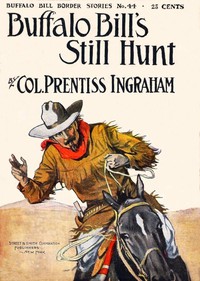
Buffalo Bill's Still Hunt; Or, The Robber of the Range — Inside the Classic can be approached with a clearer sense of reading commitment from its source measurements: 66,060 words, 4 hr 48 min estimated reading time, and 30 detected text sections.
The text analysis averages about 19.7 words per sentence, while the detected sections provide another way to judge how the source is divided.
Project Gutenberg metadata also associates the work with “Western stories,” connecting these edition facts with the source record’s subject description.
Explore this collection
These alternatives are selected using recorded categories and estimated reading time.
About 279 minutes
Adventure Picaresque Fiction
64,073 recorded words. 9 minutes difference from this book's estimate.
View Gutenberg source #64080About 278 minutes
Adventure Picaresque Fiction
63,749 recorded words. 10 minutes difference from this book's estimate.
View Gutenberg source #63977About 300 minutes
Adventure Picaresque Fiction
68,897 recorded words. 12 minutes difference from this book's estimate.
View Gutenberg source #66718Search stored excerpts and compare books → Choose by your preferences →
Choices use stored catalog measurements. Estimates vary with reading speed. A shared category is a catalog label, not a claim that two books have the same argument or literary quality.
Search reads excerpt text stored with this catalog and links to its associated Gutenberg record. The connection is stored in the site database; this tool does not recheck that every excerpt is word-for-word identical to that external record. Excerpt search does not cover every chapter and does not verify historical publication dates.
Catalog snapshot checked: 2026-09-25. Coverage: 92 public books, 92 available source excerpts.
Calculated from edition completeness, EPUB availability, text structure and catalogue metadata. Not a user rating.
Total of 100 points, scaled to a 2.5-5.0 range. Editions with an empty description or a missing EPUB file are not scored.
Public-domain source text
The source text is kept in the dedicated reader, separate from this catalogue record and its commentary.
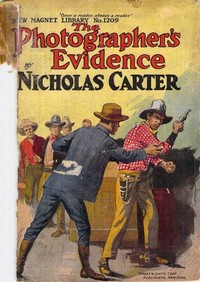
The excerpt from Buffalo Bill's Still Hunt drops the reader into a charged standoff in Yellow Dust Valley. Buffalo Bill, seated at a table, has a miner named Pistols under his revolver while a hostile crowd of sixty backs the accuser. The scout's calm is described as 'beautifully serene' by an onlooker, a phrase that captures the deliberate coolness Ingraham assigns to his hero. The scene hinges on a precarious balance: Bill faces death from the crowd, but Pistols is equally close to being shot, creating a mutual hostage situation that the author sustains through clipped dialogue and layered threats.
The confrontation in the excerpt is built on a series of escalating risks. Buffalo Bill does not simply face one enemy; he is surrounded by 'the very worst element in the mines,' who are described as having 'nothing to lose.' Ingraham emphasizes the numerical odds—sixty to two after the Surgeon Scout arrives—and the crowd's willingness to sacrifice Pistols to get at Bill. The author uses the miner's phrase 'beautifully serene' to underscore Bill's composure, a detail that contrasts with the mob's restlessness. The scene's tension derives not from physical action but from the threat of a single shot triggering a massacre, a structure Ingraham repeats in other dime novels.
Buffalo Bill's speech in the excerpt is marked by a sardonic edge. He tells Pistols, 'if I am facing death, you are just as close as I am to it, so begin business when you please, and you’ll find that I’ll never hang, and dying, will take company along, so as not to get too lonesome on the trail across the Dark River.' The phrasing mixes frontier fatalism with a theatrical threat—'Dark River' as a euphemism for death. Ingraham gives Bill a voice that is both defiant and darkly humorous, a pattern consistent with the dime-novel tradition of the hero who talks as boldly as he acts. The Surgeon Scout's entrance is equally commanding: 'What does this mean, holding a government officer under your guns?' The dialogue drives the scene forward without physical violence.
The arrival of Frank Powell, the Surgeon Scout, shifts the power dynamic. Ingraham describes him as 'hurling men right and left by his giant strength as though they were children,' a physical intervention that breaks the stalemate. The crowd's reaction is split: 'a perfect yell of joy burst from many' while the 'ugly element' remains hostile. The Surgeon Scout represents institutional authority—he is in uniform and a government officer—yet the mob's hatred of the army suggests that law enforcement is precarious. The excerpt ends with the crowd still divided, the threat unresolved, indicating that Ingraham uses the Surgeon Scout not as a simple deus ex machina but as a figure who intensifies the conflict between order and lawlessness.
Readers approaching the full novel will find that this standoff is only one of many such confrontations. Ingraham's style favors tense, dialogue-driven scenes where the hero's wit and nerve are tested against numerical odds. Pay attention to how the author balances Buffalo Bill's bravado with the Surgeon Scout's more formal authority, and note the recurring motif of the crowd as a volatile character in its own right.
There’s a particular loneliness in that standoff — one man holding a line against a crowd’s certainty. I felt it again reading about the Maine woods, where isolation breeds its own kind of justice. Strange how the same quiet stubbornness shows up in both places, like a thread through old stories. The Demon Trapper of Umbagog: A Thrilling Tale of the Maine Forests — Background and Themes lingers on that feeling. I don’t know why that stays with me, but it does.
Build a private reading journal entry for this title.