About 40 minutes
Red stripes — Reading Notes
Adventure Picaresque Fiction
9,121 recorded words. 0 minutes difference from this book's estimate.
View Gutenberg source #68942
The catalog record for Bulldog — Inside the Classic provides practical reading context through 9,146 words, 40 min estimated reading time, and 1 detected text section.
The text analysis averages about 19.5 words per sentence, while the detected sections provide another way to judge how the source is divided.
Project Gutenberg metadata also associates the work with “Short stories,” connecting these edition facts with the source record’s subject description.
Explore this collection
These alternatives are selected using recorded categories and estimated reading time.
About 40 minutes
Adventure Picaresque Fiction
9,121 recorded words. 0 minutes difference from this book's estimate.
View Gutenberg source #68942About 140 minutes
Adventure Picaresque Fiction
32,160 recorded words. 100 minutes difference from this book's estimate.
View Gutenberg source #66996About 174 minutes
Adventure Picaresque Fiction
39,921 recorded words. 134 minutes difference from this book's estimate.
View Gutenberg source #67169Search stored excerpts and compare books → Choose by your preferences →
Choices use stored catalog measurements. Estimates vary with reading speed. A shared category is a catalog label, not a claim that two books have the same argument or literary quality.
Search reads excerpt text stored with this catalog and links to its associated Gutenberg record. The connection is stored in the site database; this tool does not recheck that every excerpt is word-for-word identical to that external record. Excerpt search does not cover every chapter and does not verify historical publication dates.
Catalog snapshot checked: 2026-09-25. Coverage: 92 public books, 92 available source excerpts.
Calculated from edition completeness, EPUB availability, text structure and catalogue metadata. Not a user rating.
Total of 100 points, scaled to a 2.5-5.0 range. Editions with an empty description or a missing EPUB file are not scored.
Public-domain source text
The source text is kept in the dedicated reader, separate from this catalogue record and its commentary.
Max Brand's 'Bulldog' opens with a striking contrast: Peter Zinn, fresh from a year of hard labor, greets his wife with a command to 'shut up your yapping' before declaring a pup 'my kind of dog.' This blunt introduction establishes a world where strength and domination are the only currencies. The narrative voice is lean and percussive, matching Zinn's coiled rage. Brand uses short, declarative sentences and a repetitive structure—'When he first came… When he fought… When his old horse…'—to build a rhythm of grievance. The constable, Tom Frejus, is presented as a persistent antagonist, but the text subtly undercuts Zinn's perspective: Frejus arrests him for cruelty to a horse, a detail that foreshadows the story's central moral pivot. The prose is unadorned, relying on physical details—cropped head, sledgehammer muscles, a chill whirl of snow—to externalize Zinn's internal state.
The story's early paragraphs are built on a syntax of accumulation. Zinn's grievances are listed in a series of 'when' clauses, each a fresh indictment: 'When he first came to Sioux Crossing and fought the three men… When he fought the Gandil brothers… When his old horse, Fidgety, balked…' This repetition mimics the obsessive loop of Zinn's thoughts. The narrator adopts a free indirect style that stays close to Zinn's consciousness, using words like 'manifestly' and 'crowning torment' to convey his self-justifying logic. Yet the text also includes details that undercut him—the constable's plea for clemency, the horse's balking—creating a subtle gap between Zinn's perception and the reader's. The voice is hard-boiled but not flat; it allows moments of bitter poetry, as when Zinn sees the pine forest 'scattering toward the top and pausing where the sheeted masses of snow began,' a landscape that mirrors his own halted ascent.
The story's middle section shifts from interior monologue to external action, and the pace accelerates dramatically. The jailbreak and subsequent siege are rendered in short, staccato sentences: 'guns began to bark and rattle—reports with a metallic and clanging overtone… then a distant shouting rolled confusedly.' Brand uses sound to create urgency—the 'bark and rattle' of rifles, the 'wild voice' of the wounded constable. The scene is structured as a series of quick cuts: the constable's charge, the bullets, the dust, the fall. Time slows only when Zinn watches Frejus crawl, and the prose mirrors his hesitation: 'He had not covered a yard when the Winchester cracked again and Tom crumpled on his face.' The repetition of 'Jimminy whiskers' from Tony Jeffreys provides a folkloric counterpoint to the violence, grounding the action in a specific, vernacular world.
Throughout the excerpts, animal comparisons shape the moral landscape. Zinn's dog Blondy is a 'trembling, eager body' held between his hands, a physical extension of his own aggression. The constable, when wounded, is likened to 'old Gripper cowering against the fence'—a dog Zinn's own animal had dominated. This reversal is the story's hinge: the man Zinn hated becomes the creature he once pitied. The text draws the parallel explicitly: 'Tom Frejus was crushed indeed, and begging as Gripper had begged.' Zinn's response is described in almost supernatural terms—'he threw his long arms out before him as though he were running to embrace a bodiless thing; a great wordless voice swelled in his breast.' The language shifts from concrete to abstract, suggesting a transformation that transcends the simple revenge plot. The animal imagery, initially used to dehumanize, becomes a vehicle for empathy.
Readers should attend to how Brand uses physical detail—a cropped head, a broken leg, a dog's trembling body—to externalize psychological states. The story's brevity (under 10,000 words) forces a compressed arc; note how the opening's repetitive syntax gives way to the fragmented urgency of the siege, then to the almost mythic language of Zinn's final act. The title 'Bulldog' applies not just to the animal but to the stubborn, tenacious quality of both Zinn and his antagonist. The excerpts leave the outcome unresolved, but the moral geometry is clear: the story tests whether strength can be redirected from destruction to protection.
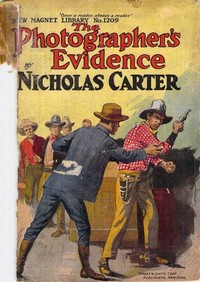
That rainy afternoon, I kept thinking about Zinn’s caged anger, how it thinned into something quieter. Later, dusting a shelf, I stumbled on The Photographer's Evidence; Or, Clever but Crooked — Reading Companion, and it felt like the same storm passing over different ground—cleverness as its own kind of prison. The rain never let up, and I read until the light failed.
Answer a few questions and save a private reflection on this device.