About 392 minutes
Angelica — A Reader’s Guide
Fantasy Juvenile Worlds
89,931 recorded words. 9 minutes difference from this book's estimate.
View Gutenberg source #68800
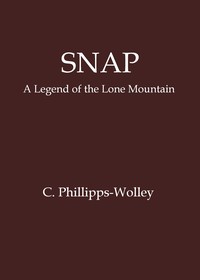
Snap: A legend of the Lone Mountain — Context and Discussion can be approached with a clearer sense of reading commitment from its source measurements: 87,976 words, 6 hr 23 min estimated reading time, and 7 detected text sections.
The text analysis averages about 22.2 words per sentence, while the detected sections provide another way to judge how the source is divided.
Project Gutenberg metadata also associates the work with “English fiction -- 19th century,” connecting these edition facts with the source record’s subject description.
Explore this collection
These alternatives are selected using recorded categories and estimated reading time.
About 392 minutes
Fantasy Juvenile Worlds
89,931 recorded words. 9 minutes difference from this book's estimate.
View Gutenberg source #68800About 356 minutes
Fantasy Juvenile Worlds
81,780 recorded words. 27 minutes difference from this book's estimate.
View Gutenberg source #61837About 330 minutes
Fantasy Juvenile Worlds
75,836 recorded words. 53 minutes difference from this book's estimate.
View Gutenberg source #68692Search stored excerpts and compare books → Choose by your preferences →
Choices use stored catalog measurements. Estimates vary with reading speed. A shared category is a catalog label, not a claim that two books have the same argument or literary quality.
Search reads excerpt text stored with this catalog and links to its associated Gutenberg record. The connection is stored in the site database; this tool does not recheck that every excerpt is word-for-word identical to that external record. Excerpt search does not cover every chapter and does not verify historical publication dates.
Catalog snapshot checked: 2026-09-25. Coverage: 92 public books, 92 available source excerpts.
Calculated from edition completeness, EPUB availability, text structure and catalogue metadata. Not a user rating.
Total of 100 points, scaled to a 2.5-5.0 range. Editions with an empty description or a missing EPUB file are not scored.
Public-domain source text
The source text is kept in the dedicated reader, separate from this catalogue record and its commentary.
The novel begins not in the Rocky Mountains but on an English cricket field, where the Fernhall Eleven fret over a missing batsman. The captain, Winthrop, is described through the narrator's wry observation of teammate Poynter's temperamental bowling: "If you put him on first with the wind in his favour, Poynter would be beautifully good-tempered." This opening establishes a voice that is both precise about sport and gently ironic about human nature. The reader is thus primed for a story that values character as much as action, and that may shift between English manners and wilderness adventure.
The table of contents shows a clear geographical and tonal arc: early chapters like "Fernhall v. Loamshire" and "The Fernhall Ghost" give way to "Leave Liverpool" and then "After Scrub Cattle," "Bringing Home the Bear," and "Lone Mountain." The excerpts confirm this transition. The cricket chapter uses a leisurely, detailed style focused on team dynamics and individual quirks. By contrast, the later excerpt describing Snap's encounter with a mountain lion is taut and sensory: "the long snake-like figure of the mountain lion come in long bounds across the snow." The prose becomes more urgent, with short clauses and vivid physical detail. A first reader should note how the author modulates pace and diction to match the environment—from the measured rhythms of English sport to the stark, immediate dangers of the Canadian Rockies.
The excerpts reveal Snap primarily through what he does and what is said about him, rather than through interior monologue. In the cricket chapter, he is absent—the missing player—and discussed by others. Later, during the lion hunt, his actions are decisive: he faces the beast, fires his Winchester, and skins the panther. Yet the narrative also notes moments of stillness: after the kill, he and old Wharton "rode home almost in silence, for the spell of the night was upon them." This combination of competence and receptiveness to nature suggests a protagonist who is both practical and reflective. The reader should watch for how Snap's responses to crisis and to landscape develop across the novel, especially in the chapters titled "Snap's Redemption" and "Snap's Sacrifice."
The subtitle "A Legend of the Lone Mountain" points to a central geographical and symbolic feature. The table of contents reserves three chapters for it: "Lone Mountain," "At the Top," and "At the End of the Rope." The excerpts do not describe the mountain itself, but the surrounding landscape is rendered with care. The description of winter silence—"Almost everything sleeps: trees in their robes of snow, the bear in his cave, the streams in their bonds of ice"—builds a sense of isolation and latent threat. The Aurora Borealis is depicted as "great flames of rosy red" that "reached like the fingers of some great hand across the heavens." These passages suggest that the mountain will be a site of both physical challenge and quasi-mythic encounter, consistent with the word "legend" in the title.
The author occasionally signals jumps in time, as in Chapter XV: "I must ask my readers to skip nine months or so." This direct address reminds the reader that the story is selectively told, focusing on key episodes rather than continuous chronicle. The excerpts also leave questions unanswered. Why does Snap leave England? What is the "blow" that falls in Chapter VI? How does the ranche sale in Chapter XV affect him? The reader must infer motives from action and dialogue. The chapter titles hint at dramatic events—"The Maniac," "The Loss of 'The Cradle'," "Snap's Sacrifice"—but the excerpts provide only fragments. A first reading should treat these gaps as invitations to speculate, trusting that later chapters will illuminate earlier ones.
The cricket chapter establishes a narrator who is fond of understatement and character comedy. Poynter's bowling is described with a mock-heroic tone: "He tried to bowl rather faster than Spofforth ever did; about three times as fast as Nature ever meant John Poynter to." The dedication to "Small Clive" is similarly playful, warning that if the boy does not "be brave and go straight," the father will "give you gyp." This voice persists even in the wilderness sections, though it becomes more subdued. The reader should attend to how humor functions in the novel—whether it softens danger, reveals character, or provides relief. The contrast between the opening's light irony and the later life-or-death stakes is one of the book's structural pleasures.
Because the excerpts cover only the beginning and a few later passages, the reader should approach the novel as a series of episodes whose connections become clear only gradually. Pay attention to recurring motifs—silence, the color red, the word "snap" itself—and to how the English and Canadian settings comment on each other. The illustrations by H. G. Willink, listed in the contents, may also offer clues to key scenes. Let the gaps in the text work as they were intended: as prompts for curiosity rather than obstacles.
That book lingered with me mostly for its quiet shifts—the way a wide prairie scene slowly tightens into something predatory. It felt like sitting with a familiar ache. I think of Fiander's Widow: A Novel — Edition Insights the same way, how restraint in a voice can hold more than any outburst. Some stories simply stay, without asking anything of you.
Your answers remain private and are stored only in this browser.