About 227 minutes
A Comedy of Elopement — Background and Themes
Fantasy Juvenile Worlds
52,195 recorded words. 10 minutes difference from this book's estimate.
View Gutenberg source #62890
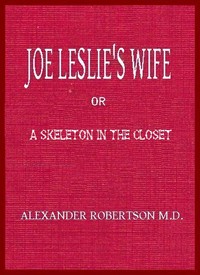
For Joe Leslie's Wife; or, a Skeleton in the Closet — Reading Notes, the stored edition analysis reports 49,765 words, 3 hr 37 min estimated reading time, and 6 detected text sections.
The text analysis averages about 16.1 words per sentence, while the detected sections provide another way to judge how the source is divided.
Project Gutenberg metadata also associates the work with “New York (N.Y.) -- Fiction,” connecting these edition facts with the source record’s subject description.
Explore this collection
These alternatives are selected using recorded categories and estimated reading time.
About 227 minutes
Fantasy Juvenile Worlds
52,195 recorded words. 10 minutes difference from this book's estimate.
View Gutenberg source #62890About 177 minutes
Fantasy Juvenile Worlds
40,501 recorded words. 40 minutes difference from this book's estimate.
View Gutenberg source #68242About 147 minutes
Fantasy Juvenile Worlds
33,720 recorded words. 70 minutes difference from this book's estimate.
View Gutenberg source #66628Search stored excerpts and compare books → Choose by your preferences →
Choices use stored catalog measurements. Estimates vary with reading speed. A shared category is a catalog label, not a claim that two books have the same argument or literary quality.
Search reads excerpt text stored with this catalog and links to its associated Gutenberg record. The connection is stored in the site database; this tool does not recheck that every excerpt is word-for-word identical to that external record. Excerpt search does not cover every chapter and does not verify historical publication dates.
Catalog snapshot checked: 2026-09-25. Coverage: 92 public books, 92 available source excerpts.
Calculated from edition completeness, EPUB availability, text structure and catalogue metadata. Not a user rating.
Total of 100 points, scaled to a 2.5-5.0 range. Editions with an empty description or a missing EPUB file are not scored.
Public-domain source text
The source text is kept in the dedicated reader, separate from this catalogue record and its commentary.
The novel opens not with a crime but with a detective's waiting room. Eric Darrell sits alone, feet on his desk, until a mirror contraption above the door reveals a veiled woman caller. This small gadget—a set of mirrors to preview visitors—is the first of many practical details that ground the story in the workaday world of a New York detective. Robertson's prose moves quickly, with short paragraphs and clipped dialogue, but lingers on the physical objects and gestures that define Darrell's trade: the handkerchief flicked over the desk, the thumb-locked door, the cigar smoked absently. The pace shifts noticeably when the scene moves from the office to an opium joint, where the language becomes more urgent and the sentences longer, as if the narrator is also struggling to keep up with the crisis unfolding.
Robertson establishes Darrell's authority through his ability to read surfaces. The veiled woman is judged by her dress and figure before she speaks; the mirror device lets him assess callers unseen. This pattern recurs: Darrell interprets a scrap of paper, a meerschaum pipe, a locked Saratoga trunk. The narrative voice mirrors this observational stance, reporting what is seen and heard without entering characters' minds. When the opium den scene arrives, the prose becomes more fragmented—'The woman was elegantly dressed—she was no doubt the wife of a wealthy citizen'—as if the detective is processing information in real time. The reader is given only what Darrell notices, creating a tight focalization that keeps the mystery close.
The novel's most sustained excerpt depicts a death in an opium den. Robertson handles the scene with a peculiar blend of clinical efficiency and moral gravity. Darrell's priority is not justice but concealment: he arranges for the body to be smuggled home, coaches the widow, and bribes the driver. The language here is procedural—'He aroused the widow,' 'the body was placed in a hack'—but undercut by phrases like 'the shame would be terrible' and 'the secret would be locked in the breast of her husband.' The pace accelerates as actions pile up: whispering, writing, carrying, feeding. Then, in the library, the story slows for the husband's confession, a harrowing tale of addiction delivered in a single long paragraph. This rhythm—fast action, then reflective pause—structures the chapter and suggests Robertson's interest in the aftermath of crisis as much as the crisis itself.
The subtitle 'A Skeleton in the Closet' signals a secret that threatens a household, and the excerpts bear this out. The detective's role is to manage secrets, not expose them. He shields the dead woman's identity, protects the husband's reputation, and files away the veiled woman's address for later inquiry. The narrative voice remains neutral, reporting Darrell's actions without endorsing or condemning them. Yet the language occasionally betrays a moral undercurrent: the detective feels 'reward' in bringing 'deep satisfaction' to the grieving husband. The story's world is one where appearances must be preserved, and the detective is the keeper of those appearances. Readers should note how Robertson uses objects—the mirror, the pipe, the trunk—as both clues and symbols of the hidden lives his characters lead.
Robertson's novel rewards attention to its small, telling details: the way a door is locked, the weight of a cigar, the texture of a veil. The narrative voice is consistent but not static, shifting pace with the demands of the scene. Readers who track how Darrell's observations are presented—what he sees, what he infers, what he chooses not to say—will find a detective story that is as much about the mechanics of seeing as about the mystery itself.
There’s something about Darrell’s quiet work—peeling back veils, waiting by locked trunks—that stays with you long after. It made me think of another story’s gentle pull, the way certain secrets echo. The Golden Chimney: A Boy's Mine — Background and Themes carries that same soft hush, a lingering warmth I keep returning to.
Your answers remain private and are stored only in this browser.