About 122 minutes
The Adam Chaser — Themes and Context
Fantasy Juvenile Worlds
27,975 recorded words. 25 minutes difference from this book's estimate.
View Gutenberg source #67834
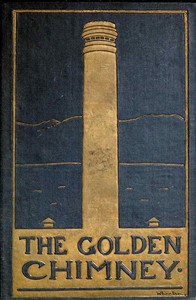
For The Golden Chimney: A Boy's Mine — Background and Themes, the stored edition analysis reports 33,720 words, 2 hr 27 min estimated reading time, and 4 detected text sections.
The text analysis averages about 13.4 words per sentence, while the detected sections provide another way to judge how the source is divided.
Project Gutenberg metadata also associates the work with “Boys -- Fiction,” connecting these edition facts with the source record’s subject description.
Explore this collection
These alternatives are selected using recorded categories and estimated reading time.
About 122 minutes
Fantasy Juvenile Worlds
27,975 recorded words. 25 minutes difference from this book's estimate.
View Gutenberg source #67834About 177 minutes
Fantasy Juvenile Worlds
40,501 recorded words. 30 minutes difference from this book's estimate.
View Gutenberg source #68242About 104 minutes
Fantasy Juvenile Worlds
23,748 recorded words. 43 minutes difference from this book's estimate.
View Gutenberg source #64944Search stored excerpts and compare books → Choose by your preferences →
Choices use stored catalog measurements. Estimates vary with reading speed. A shared category is a catalog label, not a claim that two books have the same argument or literary quality.
Search reads excerpt text stored with this catalog and links to its associated Gutenberg record. The connection is stored in the site database; this tool does not recheck that every excerpt is word-for-word identical to that external record. Excerpt search does not cover every chapter and does not verify historical publication dates.
Catalog snapshot checked: 2026-09-25. Coverage: 92 public books, 92 available source excerpts.
Calculated from edition completeness, EPUB availability, text structure and catalogue metadata. Not a user rating.
Total of 100 points, scaled to a 2.5-5.0 range. Editions with an empty description or a missing EPUB file are not scored.
Public-domain source text
The source text is kept in the dedicated reader, separate from this catalogue record and its commentary.
The story begins not with a gold strike but with a boy sitting on Russian Hill, looking down at an abandoned smelting works. Ben Ralston tells his cousin Beth he was born “just about forty years too late,” a complaint that immediately sets his restless ambition against the settled city of San Francisco. The chimney at the foot of the hill—the “golden chimney” of the title—becomes a symbol of the wealth that has passed him by. Ben has two hundred dollars in the bank and refuses a job as an errand boy at three dollars a week. The opening dialogue reveals a character who wants more than steady work; he wants a chance to get ahead quickly, and he is willing to risk his savings to find it.
The first chapter establishes Ben’s character through his conversation with Beth. He is impatient, proud, and convinced that the city’s growth has left him behind. Beth, by contrast, is observant and steady: she guesses his mood from the way he talks, and she buries her hand in the sand as she listens. Their dynamic is central to the early pages. Ben’s refusal of the store job is not just about money; it is about identity. He says, “I’m not that kind,” and later reveals that his savings have shrunk from three hundred to two hundred dollars because of unexpected bills. The excerpts do not show whether Beth joins his venture, but her silent support—pressing his hand during the disappointing clean-up—suggests she remains a confidante.
When the retort is opened after the first test, Ben expects a crucible “half-full of gold.” Instead, he gets a small sponge of gold mixed with silver. His reaction is visceral: he feels a “sickening conviction” of failure, and tears come to his eyes. The older miner Mundon has to remind him that the quantity is reasonable for a single “jiggerful” of ore. This scene is the emotional hinge of the excerpts. Ben’s disappointment is real, but Mundon’s rough calculation—based on “the tons of stuff you’ve got in sight”—offers a more measured hope. The reader sees that Ben’s expectations are unrealistic, and that the real work of mining involves patience and arithmetic, not just luck.
Chapter IX opens with Ben waking at midnight, alert to “stealthy footsteps” in the outer room. The gold is stored in a box under Mundon’s bunk—a detail that underscores how little they have and how vulnerable they are. Ben creeps to the door, sees a flash of light from a dark lantern, and wakes Mundon. The intruder is searching near the “jigger,” the machine used to process ore. The scene is tense but unresolved in the excerpts: the burglar is still there when the text cuts off. This episode introduces a new kind of danger—not just financial risk, but physical threat. It also shows Ben acting decisively, in contrast to his earlier helpless disappointment.
Elizabeth Gerberding’s San Francisco is a city of hills, abandoned industrial works, and a bay “sparkling in the sunlight.” The setting is not just backdrop; it shapes Ben’s opportunities. The smelting works on the beach, with its “smokeless chimney,” is a relic of the gold rush that Ben feels he missed. The dialogue is marked by colloquial speech: Mundon says “’tain’t a failure” and “I’m a-figurin’ roughly,” while Ben uses phrases like “dead set against it.” The boys’ names—Ben, Beth, Syd—are plain, and the narrative voice is direct. The story moves from conversation to action quickly, and the excerpts suggest a plot driven by practical problems: money, equipment, and security.
Readers should pay attention to the way Gerberding balances Ben’s emotional highs and lows with the concrete details of mining. The gold is never easy, and the story’s tension comes from the gap between Ben’s dreams and the slow, uncertain work of extraction. The excerpts do not reveal whether the mine succeeds, but they show a boy learning to measure success in ounces and silver content rather than in visions of a crucible full of gold.
Reading about Ben’s quiet gamble on that dusty smelting works, I kept thinking of the hidden rooms in Joe Leslie's Wife; or, a Skeleton in the Closet — Reading Notes. Both feel like waiting for a door to creak open. That hopeful, hollow feeling stays, doesn’t it? Long after the last page, I find myself remembering the weight of it.
Answer a few questions and save a private reflection on this device.