About 104 minutes
In colonial days — Context and Discussion
Fantasy Juvenile Worlds
23,748 recorded words. 18 minutes difference from this book's estimate.
View Gutenberg source #64944
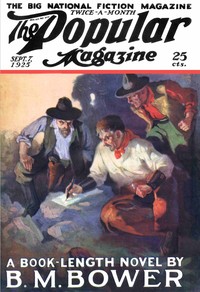
The Adam Chaser — Themes and Context can be approached with a clearer sense of reading commitment from its source measurements: 27,975 words, 2 hr 2 min estimated reading time, and 15 detected text sections.
The text analysis averages about 18.0 words per sentence, while the detected sections provide another way to judge how the source is divided.
Project Gutenberg metadata also associates the work with “Western stories,” connecting these edition facts with the source record’s subject description.
Explore this collection
These alternatives are selected using recorded categories and estimated reading time.
About 104 minutes
Fantasy Juvenile Worlds
23,748 recorded words. 18 minutes difference from this book's estimate.
View Gutenberg source #64944About 147 minutes
Fantasy Juvenile Worlds
33,720 recorded words. 25 minutes difference from this book's estimate.
View Gutenberg source #66628About 93 minutes
Fantasy Juvenile Worlds
21,253 recorded words. 29 minutes difference from this book's estimate.
View Gutenberg source #67361Search stored excerpts and compare books → Choose by your preferences →
Choices use stored catalog measurements. Estimates vary with reading speed. A shared category is a catalog label, not a claim that two books have the same argument or literary quality.
Search reads excerpt text stored with this catalog and links to its associated Gutenberg record. The connection is stored in the site database; this tool does not recheck that every excerpt is word-for-word identical to that external record. Excerpt search does not cover every chapter and does not verify historical publication dates.
Catalog snapshot checked: 2026-09-25. Coverage: 92 public books, 92 available source excerpts.
Calculated from edition completeness, EPUB availability, text structure and catalogue metadata. Not a user rating.
Total of 100 points, scaled to a 2.5-5.0 range. Editions with an empty description or a missing EPUB file are not scored.
Public-domain source text
The source text is kept in the dedicated reader, separate from this catalogue record and its commentary.
The novel opens with a stalled car in a rugged Arizona canyon, the radiator cap blowing off like "amateur home-brew." The protagonist, John Abington, responds with a monologue directed at absent companions, not the vehicle or heat. This initial scene establishes a voice that is colloquial, sardonic, and grounded in physical detail—the "blistering wind," the "deep sandy gravel." The arrival of a dust-covered roadster and its two occupants shifts the tone to one of wary negotiation, with clipped dialogue and squinting, desert-wrinkled faces.
As Abington later ventures alone into a cave system, the prose changes markedly. The pace slows, and the language becomes more introspective, with Abington whispering to himself about "a gold mine of records" and ancient symbols. The narrative voice moves from external action to internal puzzle-solving, tracking his careful examination of carvings and his growing absorption in the quest.
The opening chapter establishes a world of mechanical failure and human tension. Abington's car stalls in a canyon "thinly pock-marked with prospect holes," and his irritation is directed at "Shorty" and "Pete," not the machine. The dialogue with the roadster's driver is terse and practical, with each line revealing character through action—the driver's "hopeful tone" when asking about water, Abington's calm smile. The setting is harsh: sunlight with "sharp needle points of heat."
Once underground, the sensory palette shifts. The narrative dwells on the feel of "fine red sand packed hard and smooth," the "dimming of his carbide lamp," and the silence of ancient corridors. Abington's internal monologue replaces conversation, and his observations become meticulous: he notes that man-made passages were "cunningly constructed to deceive the devil himself." The pace slows to match his careful crawling and climbing, a deliberate contrast to the earlier roadside urgency.
Abington's archaeological eye is drawn to the cave's carvings, which he calls the work of a "Scribblers' Club of very active members." The text emphasizes his methodical approach: he identifies stone hammers and wedges, distinguishes water channels from man-made drifts, and struggles to read symbols that "all looked much alike." His frustration is palpable when he admits he "could make nothing of them."
The narrative voice here is precise and self-aware. Abington muses on whether the carvings were meant to "confuse the devil," then challenges himself: "Let's see if I am smarter than the devil!" This blend of scientific curiosity and wry humor defines his character. The prose mirrors his focus, with long sentences tracking his movements through winding passages and his growing awareness of time lost. The lamp's failing light becomes a practical constraint, forcing him to reckon with the hours spent in pursuit.
Abington's absorption in the cave leads to a striking temporal dislocation. He checks his watch to find it is "eleven thirty-five" and realizes he has been underground for three or four hours, though it felt "timeless." The narrative underscores this by noting that his carbide lamp, filled the previous evening, is now dying. His reaction—"Damned idiot!"—is a rare self-directed curse, breaking the scholarly calm.
The passage highlights a key tension: the archaeologist's intellectual drive versus practical survival. The lamp's failure is described in technical detail—the water compartment, the carbide lumps, the "tiny lever"—grounding the moment in the material reality of early twentieth-century equipment. This shift from abstract puzzle to immediate need marks a turning point in the narrative's pace, as the external world reasserts itself. The reader is left with Abington alone in the dark, the quest interrupted by a mundane but urgent limitation.
Readers attentive to shifts in language will find that Bower uses voice as a compass: the clipped, wary dialogue of the surface contrasts with the introspective, almost playful monologue of the cave. The pace, too, is a clue to Abington's state of mind—hurried and reactive above ground, deliberate and absorbed below. These changes in tempo and tone are not merely stylistic; they map the protagonist's movement from social entanglement to solitary obsession. The novel rewards those who watch how the prose itself tracks the journey.
Reading about Abington’s descent into those deceptive passages, I remembered the summer I spent lost in a dusty paperback, the desert heat seeping through the screen door. That lonely, stepping-careful feeling of being watched by ancient stone. A Commentary — Key Ideas to Explore brought that same quiet awe back, a reminder of how silence itself can feel like a place.
Build a private reading journal entry for this title.