About 209 minutes
The Princess Sonia — Key Ideas to Explore
Science Fiction Utopias
48,038 recorded words. 27 minutes difference from this book's estimate.
View Gutenberg source #62637
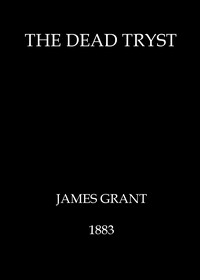
Before opening The dead tryst — Context and Discussion, the edition data offers a quick orientation: 54,084 words, 3 hr 56 min estimated reading time, and 5 detected text sections.
The text analysis averages about 24.3 words per sentence, while the detected sections provide another way to judge how the source is divided.
Project Gutenberg metadata also associates the work with “Ghost stories,” connecting these edition facts with the source record’s subject description.
Explore this collection
These alternatives are selected using recorded categories and estimated reading time.
About 209 minutes
Science Fiction Utopias
48,038 recorded words. 27 minutes difference from this book's estimate.
View Gutenberg source #62637About 265 minutes
Science Fiction Utopias
60,769 recorded words. 29 minutes difference from this book's estimate.
View Gutenberg source #63223About 207 minutes
Science Fiction Utopias
47,396 recorded words. 29 minutes difference from this book's estimate.
View Gutenberg source #68754Search stored excerpts and compare books → Choose by your preferences →
Choices use stored catalog measurements. Estimates vary with reading speed. A shared category is a catalog label, not a claim that two books have the same argument or literary quality.
Search reads excerpt text stored with this catalog and links to its associated Gutenberg record. The connection is stored in the site database; this tool does not recheck that every excerpt is word-for-word identical to that external record. Excerpt search does not cover every chapter and does not verify historical publication dates.
Catalog snapshot checked: 2026-09-25. Coverage: 92 public books, 92 available source excerpts.
Calculated from edition completeness, EPUB availability, text structure and catalogue metadata. Not a user rating.
Total of 100 points, scaled to a 2.5-5.0 range. Editions with an empty description or a missing EPUB file are not scored.
Public-domain source text
The source text is kept in the dedicated reader, separate from this catalogue record and its commentary.
The novel opens in a Cologne hotel room where three women—the Countess of Frankenburg, her daughter Ernestine, and her orphan niece Herminia—are idling over Tauchnitz editions. A letter announces the arrival of Heinrich, a Prussian officer, with his English friend Carl Pierrepont. The Countess's gaze fixes on Herminia, who sighs and tosses aside her book. This small gesture, paired with the setting's calm before the war, signals a tension that will deepen as the narrative moves from drawing-room unease to the chaos of battle.
The first chapter establishes character through restraint. Herminia's refusal to reply to the Countess, followed by her sigh and the discarded novel, is the only overt disruption of polite decorum. The narrator withholds explanation, letting the reader infer a private conflict. The setting—a window overlooking the Rhine—frames the story geographically and historically, anchoring the personal drama in a city that will soon be overtaken by war. Grant uses the Tauchnitz edition as a prop: a mass-market English novel in German hands, hinting at cultural crosscurrents. The chapter ends without resolving the tension, leaving the reader to wonder what Herminia's silence portends.
The later excerpt plunges into the Franco-Prussian War with stark specificity. Grant describes the Crown Prince's battery on the heights of Schweigen, the Thuringians shouting 'Vorwarts! Vorwarts! Hoch Germania!' as they cross the river, and a young ensign shot through the head while carrying the King's colour. The prose is rapid and sensory: 'clouds of smoke,' 'red-breeched Zouaves,' 'dark, savage Turcos.' General Douay's suicide-like advance—slaying his horse, drawing his sword, walking alone into shellfire—is rendered with grim clarity. The battle is not glorified; it is a series of brutal, fragmented images. Carl's search for Heinrich amid the melee introduces a personal stake, but the excerpt ends with a Turco's bayonet at Heinrich's throat, the outcome unknown.
The excerpts reveal a deliberate structural contrast. The opening is static, interior, and psychologically charged; the battle scene is kinetic, exterior, and physically violent. Grant moves from whispered tensions to cannon fire, from a single sigh to a soldier's death. This juxtaposition suggests that the novel's romance and horror are intertwined: the war does not merely interrupt the domestic plot but amplifies its stakes. The reader, having seen Herminia's silent distress, may read the battlefield as an externalization of inner conflict. Yet the excerpts do not confirm a direct link; they leave the connection ambiguous, inviting the reader to watch for how the two threads converge.
Grant's narrative voice is omniscient but restrained, offering precise period details without editorializing. The Tauchnitz editions, the 'first étage' of the hotel, the mention of Potsdam and the Crown Prince—all ground the story in 1870. The battle scene uses French and German terms (fähnrich, chassepot, mitrailleuses) without translation, assuming a contemporary reader's familiarity. The prose is efficient: 'General Douay, commanding the French, was here killed by a shell.' No eulogy, no reflection. This matter-of-fact tone makes the horror more stark. The reader is left to infer the emotional weight from the action itself, not from authorial commentary.
These excerpts suggest a novel that moves between two registers: the withheld emotion of the drawing room and the explicit violence of the battlefield. A first-time reader should attend to how Grant uses silence and gesture in the opening to create suspense, and how the battle scenes later echo or disrupt those early tensions. The incomplete excerpts leave key questions unanswered—what is Herminia's secret? Does Heinrich survive?—but they establish a pattern of contrast that rewards close attention to the novel's structure and detail.
Some stories linger because they hold two truths at once—love against war’s ruin, like that ghostly tryst. I thought of that weight while reading about Hadrian’s lonely, yearning mind in Hadrian the Seventh — A Reader’s Guide. Both left me quiet afterwards, not sad, just still, as if remembering something I hadn’t lived.
Build a private reading journal entry for this title.