About 207 minutes
Glenarvon, Volume 1 (of 3) — Text and Context
Science Fiction Utopias
47,396 recorded words. 2 minutes difference from this book's estimate.
View Gutenberg source #68754
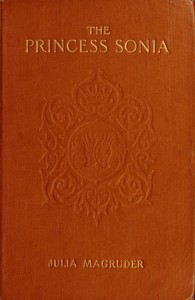
The Princess Sonia — Key Ideas to Explore can be approached with a clearer sense of reading commitment from its source measurements: 48,038 words, 3 hr 29 min estimated reading time, and 6 detected text sections.
The text analysis averages about 20.1 words per sentence, while the detected sections provide another way to judge how the source is divided.
Project Gutenberg metadata also associates the work with “Female friendship -- Fiction,” connecting these edition facts with the source record’s subject description.
Explore this collection
These alternatives are selected using recorded categories and estimated reading time.
About 207 minutes
Science Fiction Utopias
47,396 recorded words. 2 minutes difference from this book's estimate.
View Gutenberg source #68754About 186 minutes
Science Fiction Utopias
42,770 recorded words. 23 minutes difference from this book's estimate.
View Gutenberg source #65561About 236 minutes
Science Fiction Utopias
54,084 recorded words. 27 minutes difference from this book's estimate.
View Gutenberg source #68789Search stored excerpts and compare books → Choose by your preferences →
Choices use stored catalog measurements. Estimates vary with reading speed. A shared category is a catalog label, not a claim that two books have the same argument or literary quality.
Search reads excerpt text stored with this catalog and links to its associated Gutenberg record. The connection is stored in the site database; this tool does not recheck that every excerpt is word-for-word identical to that external record. Excerpt search does not cover every chapter and does not verify historical publication dates.
Catalog snapshot checked: 2026-09-25. Coverage: 92 public books, 92 available source excerpts.
Calculated from edition completeness, EPUB availability, text structure and catalogue metadata. Not a user rating.
Total of 100 points, scaled to a 2.5-5.0 range. Editions with an empty description or a missing EPUB file are not scored.
Public-domain source text
The source text is kept in the dedicated reader, separate from this catalogue record and its commentary.
The catalog classifies The Princess Sonia as Science Fiction & Utopias, yet the excerpts contain no speculative elements. Instead, the opening chapter introduces Martha Keene, an American art student in Paris, whose "ability to stick" earns her the grudging approval of her master Etienne. The narrative voice is observational, attentive to small gestures—a frown, a fluttering heart—and the social choreography of introductions. The princess, when she appears, is described through her effect on Martha: "her heart thumped so that her breathing became rapid." The story unfolds in ateliers and drawing rooms, not future worlds.
The excerpts repeatedly dramatize characters controlling their outward composure. When Martha meets the princess’s congratulatory smile, she fears losing self-control and "needed a stern effort not to do so." Later, during the introduction to Harold, the princess feels "a wild excitement" but conceals it behind a "ceremonious bow." Harold, in turn, is described as "quite as collected as she," his severe evening dress and grave face speaking of "composure, deliberation, and repose." The narrative lingers on these performances, suggesting that social interaction is a contest of wills masked by politeness.
Martha’s perspective frames the story. She is the earnest, less brilliant student who "worshiped" both Etienne and the princess. Her American identity is marked by her directness and her discomfort with the formality she observes. When she introduces her brother to the princess, she is disappointed that their meeting is "so absolutely without cordiality." The princess, by contrast, navigates Parisian Bohemia with self-protective bravado, as shown in her anecdote about mistaking Etienne for a servant. The narrative uses Martha’s viewpoint to highlight cultural differences in social performance.
The excerpts are rich in material detail. The princess wears "a plain gown of thick yellow satin, with trimmings of brown fur and creamy lace," a "diamond arrow" in her hair, and "a great clasp of many-colored jewels in an antique setting." Harold’s appearance is equally precise: "severe evening dress," "close-trimmed, pointed beard," and "straight, smooth hair, with its definite part." The atelier is described through its dirty sail-cloth and Etienne’s carpet slippers and lobster-can. These details ground the story in a specific, tangible world of 1890s Paris.
The excerpts offer no evidence of science fiction or utopian themes. Readers should approach The Princess Sonia as a character-driven social drama, attentive to the subtle power dynamics and emotional undercurrents that the narrative conveys through gesture and description. The incomplete text leaves the princess’s background and the trajectory of her relationships unclear, but the existing passages reward close reading for their psychological nuance.
There’s something tender in watching Martha measure herself against Sonia’s polished grace, that quiet ache of wanting to belong to a world that never quite lets you in. It reminds me of the longing threaded through The Man Inside — Context and Discussion, where the real self seems to hide behind everything we perform. I find myself thinking about that old distance between who we are and who we seem.
Build a private reading journal entry for this title.