About 27 minutes
Mrs Dalloway in Bond Street — Key Ideas to Explore
Historical Psychological Social Fiction
6,180 recorded words. 0 minutes difference from this book's estimate.
View Gutenberg source #63107
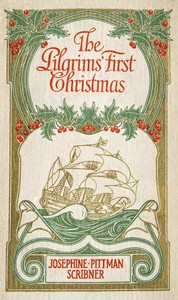
This digital edition of The Pilgrims' First Christmas — Key Ideas to Explore is described by source-level measurements including 6,079 words, 27 min estimated reading time, and 4 detected text sections.
The text analysis averages about 21.7 words per sentence, while the detected sections provide another way to judge how the source is divided.
Project Gutenberg metadata also associates the work with “Historical fiction,” connecting these edition facts with the source record’s subject description.
Explore this collection
These alternatives are selected using recorded categories and estimated reading time.
About 27 minutes
Historical Psychological Social Fiction
6,180 recorded words. 0 minutes difference from this book's estimate.
View Gutenberg source #63107About 47 minutes
Historical Psychological Social Fiction
10,805 recorded words. 20 minutes difference from this book's estimate.
View Gutenberg source #67680About 61 minutes
Historical Psychological Social Fiction
13,928 recorded words. 34 minutes difference from this book's estimate.
View Gutenberg source #66454Search stored excerpts and compare books → Choose by your preferences →
Choices use stored catalog measurements. Estimates vary with reading speed. A shared category is a catalog label, not a claim that two books have the same argument or literary quality.
Search reads excerpt text stored with this catalog and links to its associated Gutenberg record. The connection is stored in the site database; this tool does not recheck that every excerpt is word-for-word identical to that external record. Excerpt search does not cover every chapter and does not verify historical publication dates.
Catalog snapshot checked: 2026-09-25. Coverage: 92 public books, 92 available source excerpts.
Calculated from edition completeness, EPUB availability, text structure and catalogue metadata. Not a user rating.
Total of 100 points, scaled to a 2.5-5.0 range. Editions with an empty description or a missing EPUB file are not scored.
Public-domain source text
The source text is kept in the dedicated reader, separate from this catalogue record and its commentary.
The novella opens with a bleak December day in 1620, the Mayflower struggling along the coast with a broken rudder and split masts. The prose immediately establishes a tone of anxiety and grief, comparing the Pilgrims' trial to Abraham's. The women and children are locked in airless cabins, and among them is Mary Chilton, described as an "English maid, divinely fair." Her interaction with the Billington boy about Santa Claus introduces a thread of childhood hope amid hardship. This opening frames the story as one of endurance and faith, setting up a contrast between the harsh external world and the internal resilience of the characters.
The first excerpt plunges readers into the physical and emotional turmoil of the voyage. The ship's damage—"her rudder broken, her masts split in three pieces"—is described with concrete detail, while the men's anxiety is linked to "unknown perils." The narrative voice adopts a biblical cadence, asking what could sustain them but "the spirit of God and his grace." This religious framing is reinforced by the allusion to Abraham. Notably, the focus shifts to Mary Chilton, whose tears and smile are observed by John Winslow. Her role as a caretaker—nursing the sick, amusing children, restraining the Billington boy—is established early, positioning her as a moral anchor. The dialogue about Santa Claus and shoes introduces a folk tradition, hinting at how the Pilgrims might reconcile their faith with familiar customs.
A later excerpt describes the birth of Peregrine White, the first child born to the Pilgrims in the New World. The community interprets the event as an omen: "A citizen! A citizen!" they cry, and the baby is handed around while they sing the carol "Unto us a child is born." The scene is brief but significant, linking the infant to the idea of a new nation. Susanna White, the mother, lies in a "lowly bed" and "marveled and was content." The language here is restrained, focusing on the collective response rather than individual emotion. This section serves as a pivot from the opening's struggle to the closing's celebration, using the birth as a symbol of continuity and hope. The carol ties the event to Christmas, reinforcing the holiday theme without explicit mention of the date.
The final excerpt lists the gifts of that first Christmas: "the clear, sparkling water; the seed corn, precious as jewels; the beginning of the free, fair homes; the new citizen, the little pilgrim; and the great gift of self-government and the freedom to worship." The list is abstract, focusing on ideals rather than material objects. The narrative then expands to the legacy: "the greatest gift of all is the mighty nation that has sprung from their loins." This forward-looking conclusion uses biblical language—"multiplied as the stars of the heavens"—to connect the Pilgrims' story to a providential destiny. The shift from the specific (water, corn) to the grand (nation, freedom) mirrors the novella's arc from immediate survival to enduring significance.
When read sequentially, the three excerpts trace a clear emotional and thematic progression: from the storm-tossed ship to the hopeful birth to the celebratory gift-giving. The opening emphasizes physical danger and emotional strain, the middle introduces a communal event that redefines the group's identity, and the closing reframes the entire experience as the foundation of a nation. Mary Chilton appears only in the opening, but her care for the Billington boy and her tears for England establish a human scale that the later, more symbolic passages build upon. The novella's brevity—under 6,100 words—means each excerpt carries significant weight. Readers should note how the author balances historical detail with sentimental language, and how the religious and patriotic themes are intertwined from the start.
The excerpts reveal a work that moves from specific hardship to generalized triumph. The opening's concrete details—broken masts, battened hatches—give way to the closing's abstract gifts. Readers may find that the novella's power lies in this transition, as it transforms a historical moment into a founding myth. Pay attention to how the author uses children (the Billington boy, Peregrine White) to bridge the personal and the national, and how the language of faith underpins every stage of the journey.
That little novella stayed with me because the turning point wasn’t the feast, but the quiet moment before it—when giving felt less like celebration and more like hope. There’s a similar trembling in The Undesirable Governess — Story, Setting & Ideas, where a stranger’s small offering changes the whole temperature of a room without anyone announcing it. I kept thinking about that long after finishing.
Save your reaction, strongest insight, and memorable passage.