About 388 minutes
David Vallory — Text and Context
Historical Psychological Social Fiction
89,019 recorded words. 22 minutes difference from this book's estimate.
View Gutenberg source #66754
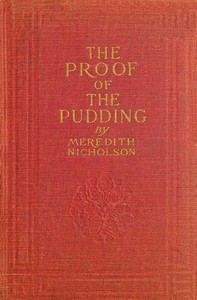
This digital edition of The Proof of the Pudding — Text and Context is described by source-level measurements including 94,144 words, 6 hr 50 min estimated reading time, and 33 detected text sections.
The text analysis averages about 16.4 words per sentence, while the detected sections provide another way to judge how the source is divided.
Project Gutenberg metadata also associates the work with “Inheritance and succession -- Fiction,” connecting these edition facts with the source record’s subject description.
Explore this collection
These alternatives are selected using recorded categories and estimated reading time.
About 388 minutes
Historical Psychological Social Fiction
89,019 recorded words. 22 minutes difference from this book's estimate.
View Gutenberg source #66754About 374 minutes
Historical Psychological Social Fiction
85,993 recorded words. 36 minutes difference from this book's estimate.
View Gutenberg source #65182About 449 minutes
Historical Psychological Social Fiction
103,164 recorded words. 39 minutes difference from this book's estimate.
View Gutenberg source #63076Search stored excerpts and compare books → Choose by your preferences →
Choices use stored catalog measurements. Estimates vary with reading speed. A shared category is a catalog label, not a claim that two books have the same argument or literary quality.
Search reads excerpt text stored with this catalog and links to its associated Gutenberg record. The connection is stored in the site database; this tool does not recheck that every excerpt is word-for-word identical to that external record. Excerpt search does not cover every chapter and does not verify historical publication dates.
Catalog snapshot checked: 2026-09-25. Coverage: 92 public books, 92 available source excerpts.
Calculated from edition completeness, EPUB availability, text structure and catalogue metadata. Not a user rating.
Total of 100 points, scaled to a 2.5-5.0 range. Editions with an empty description or a missing EPUB file are not scored.
Public-domain source text
The source text is kept in the dedicated reader, separate from this catalogue record and its commentary.
Meredith Nicholson opens The Proof of the Pudding with a sustained social scene at a country club, where the lingering luncheon and the behavior of the Kinney party establish a world of leisure and excess. The narration quickly pivots to Nan’s internal discomfort, contrasting the raucous company with her growing sobriety. Nicholson’s diction—words like “maudlin,” “mockingly,” and “abstemiousness”—signals a moral judgment embedded in the descriptive texture. The dialogue, too, carries weight: Billy’s earnest declarations and Nan’s measured responses reveal a relationship tested by environment. The author’s choice to set key emotional decisions against a backdrop of drunken revelry underscores the novel’s interest in character under pressure.
Nicholson crafts dialogue that reveals not just plot but moral stance. In the excerpt, Billy’s speech shifts from casual to earnest: “I’ve cut it out; passed it up for good. I’m going to live straight and try to get back all I’ve lost.” The repetition and short clauses convey a man reforming himself. Nan’s responses are more guarded: “But we finished that, Billy. We can’t go back to it again!” Her reluctance is voiced through negation and finality. The author avoids lengthy monologues; instead, characters speak in bursts that mirror their emotional states. Even minor characters like Andrews blurt out confessions (“Always meant to tell you I loved you, Nan”) in a way that feels both impulsive and revealing of the social looseness of the party. Nicholson uses these exchanges to build tension between public performance and private truth.
The country club setting is not mere backdrop but an active force in the narrative. Nicholson describes the waiters, the victrola, the “jingling tray” of high-balls, and the “flushed, rumpled, maudlin” guests. These details accumulate to create a atmosphere of excess from which Nan recoils. The author contrasts this with the “cool night air” and “bright shield of stars” during the car ride—a shift from indoor confinement to outdoor clarity. Billy’s abstemiousness is noted: “Billy was the only sober man in the company.” This detail, placed amid the chaos, elevates him in Nan’s eyes. Nicholson uses the physical environment to mirror moral choices: the club represents temptation and decline, while the open road suggests possibility and renewal. The setting thus becomes a tool for character development, not just decoration.
Nicholson employs a close third-person narration that dips into Nan’s thoughts, allowing readers to track her shifting perceptions. Phrases like “Nan’s thoughts were sober ones” and “she gave to his good conduct during the evening an exaggerated importance” reveal her self-awareness and rationalizations. The narrator does not simply report actions but interprets them: “Like many young girls she had found the adoration of an older man flattering.” This authorial commentary adds a layer of psychological depth. The tension between what Nan says aloud and what she thinks internally—her “anxiety to be just”—creates a nuanced portrait of a young woman making a consequential decision. Nicholson balances sympathy with critical distance, never fully endorsing Nan’s judgments.
Though the excerpts are limited, the catalog subjects—inheritance, adoption, man-woman relationships—are hinted at in the text. Nan’s reference to a Farley who “had been cruelly unjust to her” and who “deliberately planned to give the bulk of his fortune to charity” introduces a conflict over money and loyalty. Billy’s mention of “all I’ve lost” and his desire to “get back” what’s gone suggests financial stakes. The title itself, The Proof of the Pudding, implies a test of value—perhaps of character or of promises. Nicholson weaves these motifs through dialogue and internal monologue, making inheritance not just a plot device but a measure of personal integrity. The reader is left to wonder how these early tensions will resolve, but the groundwork is laid with careful specificity.
Readers attentive to Nicholson’s craft will find a novel that rewards close attention to its verbal texture. The author’s choices in dialogue, setting, and narrative voice create a layered exploration of social mores and personal ethics. Rather than a simple romance or inheritance tale, The Proof of the Pudding offers a study in how people present themselves versus who they are—a theme as relevant today as in 1916.
Long ago I shelved The Proof of the Pudding, and its quiet war between public cheer and private duty stayed with me. Somehow it reminds me of another old friend, Legend — A Reader’s Guide, whose pages whisper about the same lonely choosing. They sit together now, two patient neighbors.
Create a short personal record of your experience with this book.