About 374 minutes
Grey Wethers: A Romantic Novel — Inside the Classic
Historical Psychological Social Fiction
85,993 recorded words. 14 minutes difference from this book's estimate.
View Gutenberg source #65182
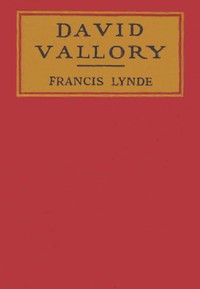
David Vallory — Text and Context can be approached with a clearer sense of reading commitment from its source measurements: 89,019 words, 6 hr 28 min estimated reading time, and 34 detected text sections.
The text analysis averages about 16.8 words per sentence, while the detected sections provide another way to judge how the source is divided.
Project Gutenberg metadata also associates the work with “Civil engineers -- Fiction,” connecting these edition facts with the source record’s subject description.
Explore this collection
These alternatives are selected using recorded categories and estimated reading time.
About 374 minutes
Historical Psychological Social Fiction
85,993 recorded words. 14 minutes difference from this book's estimate.
View Gutenberg source #65182About 410 minutes
Historical Psychological Social Fiction
94,144 recorded words. 22 minutes difference from this book's estimate.
View Gutenberg source #66354About 352 minutes
Historical Psychological Social Fiction
80,823 recorded words. 36 minutes difference from this book's estimate.
View Gutenberg source #65238Search stored excerpts and compare books → Choose by your preferences →
Choices use stored catalog measurements. Estimates vary with reading speed. A shared category is a catalog label, not a claim that two books have the same argument or literary quality.
Search reads excerpt text stored with this catalog and links to its associated Gutenberg record. The connection is stored in the site database; this tool does not recheck that every excerpt is word-for-word identical to that external record. Excerpt search does not cover every chapter and does not verify historical publication dates.
Catalog snapshot checked: 2026-09-25. Coverage: 92 public books, 92 available source excerpts.
Calculated from edition completeness, EPUB availability, text structure and catalogue metadata. Not a user rating.
Total of 100 points, scaled to a 2.5-5.0 range. Editions with an empty description or a missing EPUB file are not scored.
Public-domain source text
The source text is kept in the dedicated reader, separate from this catalogue record and its commentary.
Francis Lynde's David Vallory opens with the protagonist returning to his hometown by train, a journey that immediately establishes a pattern of movement between distant assignments and familiar places. The novel's structure is built around such transitions—from drafting rooms to construction camps, from private cars to bunk cars—each shift marking a change in power dynamics or moral pressure. Lynde uses the physical landscape of railroad building—bridges, tunnels, cuttings—as more than setting; the engineering details become a vocabulary for describing human relationships and ethical choices.
The chapter titles themselves map the novel's structural logic: "Bridge Number Two," "At Bridge Three," "The Ore Shed." These are not merely locations but thresholds where characters confront limits—of authority, of loyalty, of love. In one excerpt, the inspection trip becomes a "triumphal progress" for the new chief, yet the tunnel portal where Plegg halts David is also where Eben Grillage walks alone into darkness. Lynde repeatedly places his characters at such junctures: the bridge site where concrete mixers clank, the tunnel where dynamite blasts salute the president's arrival. The engineering work is never background; it is the arena where moral decisions are tested.
Lynde's dialogue carries much of the novel's tension through understatement and implied threat. When Plegg tells Dargin, "If you hit Vallory, you hit me," the simple syntax conceals a complex negotiation of power. The novel's voice shifts between David's interior reflections—"his heart warmed to the big man who had been so grossly misrepresented"—and the clipped exchanges of men who measure their words. The recurring phrase "I guess it's on the knees of the gods" appears as a resigned refrain, marking moments when calculation gives way to uncertainty. This verbal restraint contrasts with the industrial clamor of the settings, creating a rhythm of noise and silence.
The narrative moves fluidly between the private car of President Grillage and the isolated bunk car where Plegg "crept to his bunk, quietly, so as not to disturb his sleeping chief." These shifts in setting are also shifts in perspective: from the panoramic view of the inspection tour to the intimate space of a single character's thoughts. Lynde uses the journey itself—the train ride, the walk across the basin—as a structuring device. Each movement carries a character from one sphere of influence to another, from the drafting room's ordered lines to the raw terrain of the construction site. The physical distance between camps becomes a measure of social and ethical distance.
Lynde withholds key information from both characters and readers, creating gaps that drive the narrative. In the tunnel scene, Plegg signals David with a gesture "which David was not permitted to see," and the reader is left to infer the manipulation. This technique recurs: motives are hinted at, alliances are ambiguous. The novel's structure depends on such withheld knowledge—the reader, like David, must piece together loyalties from partial evidence. The excerpts suggest a world where power operates through unseen signals and unspoken agreements, where the "pendulum of a woman's emotions" remains as unpredictable as the outcome of a dynamite blast.
The catalog subjects list ethics as a primary theme, and the excerpts bear this out. David's work is praised for "cost-cutting" and "money-saving," but the moral calculus is never simple. The novel places its characters in situations where professional duty, personal loyalty, and romantic attachment pull in different directions. Lynde does not resolve these tensions with easy answers; instead, he lets them play out across the construction sites, where every decision has material consequences. The bridge that is built or the tunnel that is blasted becomes a concrete emblem of a choice made.
Readers approaching David Vallory will find a novel that rewards attention to its physical details—the clank of machinery, the layout of a camp, the geography of a railroad line. Lynde's prose is economical, his dialogue sharp, and his sense of place precise. The story moves at the pace of a construction schedule, with moments of stillness that carry unexpected weight. This is a work that trusts its readers to read between the lines, to hear the unsaid in a conversation, and to see the moral landscape in the contours of a hillside cutting.
That book about bridge-building and corporate loyalty stayed with me for days, especially how Lynde lets quiet, intimate moments feel as load-bearing as steel. It reminded me of something softer but just as weighty, where a single street walk holds a whole life’s decisions. I keep thinking about how both capture that quiet tension inside us. Mrs Dalloway in Bond Street — Key Ideas to Explore lingers similarly, like a half-remembered afternoon.
Answer a few questions and save a private reflection on this device.