About 336 minutes
The optimist — Reading Companion
Historical Psychological Social Fiction
77,102 recorded words. 16 minutes difference from this book's estimate.
View Gutenberg source #68524
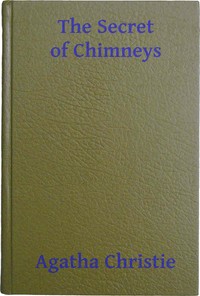
The source record for The Secret of Chimneys — Edition Insights measures this digital text at 80,823 words, 5 hr 52 min estimated reading time, and 34 detected text sections.
The text analysis averages about 10.7 words per sentence, while the detected sections provide another way to judge how the source is divided.
Project Gutenberg metadata also associates the work with “Detective and mystery stories,” connecting these edition facts with the source record’s subject description.
Explore this collection
These alternatives are selected using recorded categories and estimated reading time.
About 336 minutes
Historical Psychological Social Fiction
77,102 recorded words. 16 minutes difference from this book's estimate.
View Gutenberg source #68524About 331 minutes
Historical Psychological Social Fiction
76,121 recorded words. 21 minutes difference from this book's estimate.
View Gutenberg source #66367About 374 minutes
Historical Psychological Social Fiction
85,993 recorded words. 22 minutes difference from this book's estimate.
View Gutenberg source #65182Search stored excerpts and compare books → Choose by your preferences →
Choices use stored catalog measurements. Estimates vary with reading speed. A shared category is a catalog label, not a claim that two books have the same argument or literary quality.
Search reads excerpt text stored with this catalog and links to its associated Gutenberg record. The connection is stored in the site database; this tool does not recheck that every excerpt is word-for-word identical to that external record. Excerpt search does not cover every chapter and does not verify historical publication dates.
Catalog snapshot checked: 2026-09-25. Coverage: 92 public books, 92 available source excerpts.
Calculated from edition completeness, EPUB availability, text structure and catalogue metadata. Not a user rating.
Total of 100 points, scaled to a 2.5-5.0 range. Editions with an empty description or a missing EPUB file are not scored.
Public-domain source text
The source text is kept in the dedicated reader, separate from this catalogue record and its commentary.
The novel opens not in an English drawing-room but in Bulawayo, where Anthony Cade is shepherding a Castle's Select Tour—"seven depressed-looking females and three perspiring males." The scene immediately establishes Christie's ear for comic contrast: the tourists admire Cade's "tall lean figure" and "sun-tanned face," while his old friend Jimmy McGrath, a thickset man who might "keep a saloon," greets him with a blunt "What the hell are you doing with this pack of females?" This brisk, bantering dialogue sets the tone for a narrative that moves between continents and social registers, pairing adventure with the conventions of the country-house mystery.
Christie gives Anthony Cade a distinctive, laconic voice that marks him as a man accustomed to improvisation. When McGrath asks why he took a tour-guide job, Cade replies, "A regrettable necessity for cash. I can assure you it doesn't suit my temperament." The formal phrasing—"regrettable necessity"—is undercut by the self-aware humor. Later, when Bundle offers to be nice to him, he parries: "I'd rather you were nice to me on the water, in a boat." The clipped, ironic responses contrast with the more elaborate speech of characters like Mr. Fish, who drawls, "Young man, do you know how they get the water out of a mine?" and answers his own question: "By pumping—but its almighty hard work." This variety in dialogue registers class, nationality, and personality without lengthy exposition.
Christie often embeds character traits in physical description. Cade is introduced through the tourists' eyes: "his tall lean figure, his sun-tanned face, the light-hearted manner with which he settled disputes and cajoled them all into good temper." The description does more than sketch appearance—it signals competence and charm. Bundle, meanwhile, is defined by her "shrewd penetration" and "sharp grey eyes." When she mimics a tourist's reaction to the house—"'Eh! Gladys, they've got two pennyworth of pictures here, right enough'"—the imitation reveals her class awareness and wry detachment. Even minor figures like Mr. Fish are given telling details: he "walked gently away," a verb choice that suggests both physical lightness and evasiveness.
Christie builds suspense not through description but through what characters say—and what they leave unsaid. When Anthony asks Bundle about her French governess, the exchange is a model of oblique interrogation: "Where did you get your French governess from?" / "The man's bewitched... I got her from an Agency." Anthony's follow-up—"What about her references?"—is met with increasingly clipped answers until he concludes, "H'm!" The reader, like Bundle, senses that more is at stake than a governess's credentials. Similarly, when Mr. Fish asks whether Lord Caterham's guests are suspected, Anthony replies, "It was an outside job—I remember now," while "looking straight in front of him." The flat denial, combined with the narrator's note of his fixed gaze, creates a gap between spoken words and implied knowledge.
Chimneys itself is introduced through Bundle's irreverent monologue: "Once a week they take the dust sheets off and chars-à-bancs full of tourists come and gape." She dismisses the house as "deadly dull," yet Anthony's observation—"Yet history has been made here once or twice"—hints at a more layered past. The country house functions as a stage where characters perform roles: the host, the American visitor, the French governess. Christie uses the setting to juxtapose public spectacle (tourists, guided tours) with private intrigue (unfastened windows, midnight adventures). The lake scene, where Anthony rows Bundle out to question her, isolates the characters from the house's formal spaces, allowing for the kind of confidential exchange that drives the plot forward.
Readers attentive to Christie's dialogue will find that the novel's clues are often embedded in offhand remarks and verbal tics—a character's hesitation, a too-quick denial, a joke that lands oddly. The excerpts show a writer who trusts her audience to read between lines of banter. Pay particular attention to what characters say when they think they are not being observed, and to the small inconsistencies in their stories. The pleasure of The Secret of Chimneys lies less in the final revelation than in the deft, economical way Christie sets her puzzle in motion.
That lingering feeling—how a chance meeting can unravel so much—stayed with me long after The Secret of Chimneys. There’s a certain quiet ache in how people carry their pasts, which I found again in Mr. Carteret and Others — Key Ideas to Explore. It felt less like reading and more like remembering something I hadn’t quite lived yet.
Create a short personal record of your experience with this book.