About 153 minutes
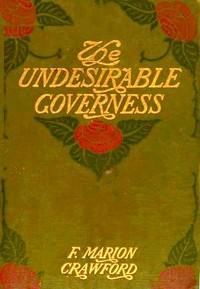
The Undesirable Governess — Story, Setting & Ideas
Historical Psychological Social Fiction
35,164 recorded words. 1 minutes difference from this book's estimate.
View Gutenberg source #62317
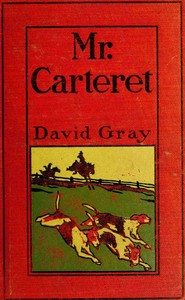
Mr. Carteret and Others — Key Ideas to Explore can be approached with a clearer sense of reading commitment from its source measurements: 34,828 words, 2 hr 32 min estimated reading time, and 5 detected text sections.
The text analysis averages about 11.9 words per sentence, while the detected sections provide another way to judge how the source is divided.
Project Gutenberg metadata also associates the work with “England -- Fiction,” connecting these edition facts with the source record’s subject description.
Explore this collection
These alternatives are selected using recorded categories and estimated reading time.
About 153 minutes
Historical Psychological Social Fiction
35,164 recorded words. 1 minutes difference from this book's estimate.
View Gutenberg source #62317About 160 minutes
Historical Psychological Social Fiction
36,621 recorded words. 8 minutes difference from this book's estimate.
View Gutenberg source #67543About 165 minutes
Historical Psychological Social Fiction
37,845 recorded words. 13 minutes difference from this book's estimate.
View Gutenberg source #65566Search stored excerpts and compare books → Choose by your preferences →
Choices use stored catalog measurements. Estimates vary with reading speed. A shared category is a catalog label, not a claim that two books have the same argument or literary quality.
Search reads excerpt text stored with this catalog and links to its associated Gutenberg record. The connection is stored in the site database; this tool does not recheck that every excerpt is word-for-word identical to that external record. Excerpt search does not cover every chapter and does not verify historical publication dates.
Catalog snapshot checked: 2026-09-25. Coverage: 92 public books, 92 available source excerpts.
Calculated from edition completeness, EPUB availability, text structure and catalogue metadata. Not a user rating.
Total of 100 points, scaled to a 2.5-5.0 range. Editions with an empty description or a missing EPUB file are not scored.
Public-domain source text
The source text is kept in the dedicated reader, separate from this catalogue record and its commentary.
David Gray's Mr. Carteret and Others opens with a drawing-room conversation that immediately establishes its method: a cluster of characters talk past one another, their remarks landing with comic imprecision. Mrs. Archie Brawle wonders whether Indians ride without saddles as a pose; Lord Frederic answers doubtfully; the curate ventures a bookish observation that is ignored; Major Hammerslea pronounces heavily on nothing. The scene is a small masterpiece of misdirected speech, each line a little off-target, and it sets the tone for a collection in which what is not said—or said at cross-purposes—matters as much as the action.
Gray's dialogue depends on interruption and trailing-off. Characters rarely complete a thought: the Major's repeated “It is a very different thing” hangs in the air, refusing to explain itself. Later, when Mr. Carteret tells Miss Rivers “Wynford is a good man—a good man,” the repetition and the dash signal discomfort, not conviction. These verbal tics accumulate, creating a texture of evasion. The narrator does not gloss the emotions; the reader infers them from what is left unsaid. In the locket scene, Carteret's “I see” followed by “He did not see at all” is the narrator's only explicit comment—a rare moment of direct insight that underscores how much is ordinarily withheld.
The stories alternate between leisurely social tableaux and sudden, compressed revelations. The opening tea-party moves at a deliberate, almost static pace—each character taking their turn, the curate's interruption punctually ignored. But the later excerpt from the locket episode accelerates sharply: sentences shorten, dialogue becomes terse, and physical actions—bowing, crossing to the door, hiding the face—replace exposition. Gray uses this gear-shift to signal emotional crisis. The drive home from Crumpelow Hill is described in a single, compressed paragraph; the moment Miss Rivers calls Carteret back is rendered in staccato exchanges. The effect is that of a held breath suddenly released.
The fox-hunting world is not mere backdrop; it inflects the way characters speak and judge one another. Major Hammerslea's pronunciation of “hunter” as “hun-ter” is a class marker, and the Americans' foreignness is measured by their relation to English country life. Mrs. Ascott-Smith's question about Indians—"Is it so?"—betrays a polite incomprehension that mirrors the larger cultural gap. Gray does not explain the rituals of the hunt; he lets them emerge through dialogue, so that the reader, like the Americans, must piece together the codes. The setting thus becomes a pressure on the language: characters define themselves by what they know or pretend to know about horses, packs, and saddles.
Because the excerpts are drawn from the first and third stories, the full arc of Mr. Carteret's relationships—and the function of the “others” named in the title—remains partially hidden. Readers should attend to the way Gray uses repeated motifs (the locket, the horse, the interrupted declaration) across stories, and to how the narrative voice shifts between ironic distance and sudden intimacy. The book rewards attention to its silences.
There’s a particular silence in Mr. Carteret’s world—the pause between foxhounds and a lifted eyebrow—that reminds me of another, softer quiet. In The Little French Girl, that same unspoken weight lingers between characters, though the landscape shifts from hunting fields to drawing rooms. I found myself thinking of it long after closing the book, which felt familiar. The Little French Girl — A Reader’s Guide holds that memory gently, like a well-worn photograph.
Your answers remain private and are stored only in this browser.