About 170 minutes
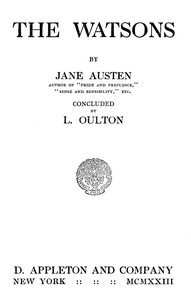
The Watsons: By Jane Austen, Concluded by L. Oulton — A Closer Reading
Historical Psychological Social Fiction
39,040 recorded words. 1 minutes difference from this book's estimate.
View Gutenberg source #63569
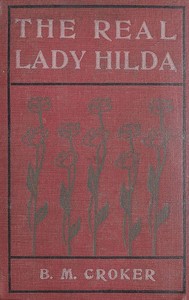
The catalog record for The Real Lady Hilda: A Sketch — A Reader’s Guide provides practical reading context through 38,821 words, 2 hr 49 min estimated reading time, and 6 detected text sections.
The text analysis averages about 15.2 words per sentence, while the detected sections provide another way to judge how the source is divided.
Project Gutenberg metadata also associates the work with “England -- Social life and customs -- 19th century -- Fiction,” connecting these edition facts with the source record’s subject description.
Explore this collection
These alternatives are selected using recorded categories and estimated reading time.
About 170 minutes
Historical Psychological Social Fiction
39,040 recorded words. 1 minutes difference from this book's estimate.
View Gutenberg source #63569About 170 minutes
Historical Psychological Social Fiction
39,034 recorded words. 1 minutes difference from this book's estimate.
View Gutenberg source #67411About 165 minutes
Historical Psychological Social Fiction
37,845 recorded words. 4 minutes difference from this book's estimate.
View Gutenberg source #65566Search stored excerpts and compare books → Choose by your preferences →
Choices use stored catalog measurements. Estimates vary with reading speed. A shared category is a catalog label, not a claim that two books have the same argument or literary quality.
Search reads excerpt text stored with this catalog and links to its associated Gutenberg record. The connection is stored in the site database; this tool does not recheck that every excerpt is word-for-word identical to that external record. Excerpt search does not cover every chapter and does not verify historical publication dates.
Catalog snapshot checked: 2026-09-25. Coverage: 92 public books, 92 available source excerpts.
Calculated from edition completeness, EPUB availability, text structure and catalogue metadata. Not a user rating.
Total of 100 points, scaled to a 2.5-5.0 range. Editions with an empty description or a missing EPUB file are not scored.
Public-domain source text
The source text is kept in the dedicated reader, separate from this catalogue record and its commentary.
The novel begins with Gwen Hayes trapped in a dismal sitting room, waiting for a lamp that never comes. Her stepmother complains about their "horrid, poky lodgings," and Gwen silently supplies the answer: "Poverty." The view from the window—a dripping hen, a coal-cart, and an undertaker's establishment with its sign of prancing black horses—establishes a world where death and dreariness are constant companions. Croker uses this claustrophobic opening to contrast sharply with later scenes of society balls and country houses.
The subtitle "A Sketch" hints at the episodic structure: the second chapter is titled "Retrospective," suggesting that the narrator looks back on events. The early chapters build a sense of confinement that makes the later transformation all the more striking.
The opening chapter, "Waiting for the Lamp," is dominated by the view of Mound & Son's funeral establishment. Gwen describes the "rigid white characters on a mourning ground" and the ornamental sign depicting a hearse drawn by four prancing black horses. The horses seem to say, "Man treats most of us barbarously all our lives, then kills us, and makes money of our very skin and bones; it affords us sincere pleasure to carry him to the grave." This macabre personification is one of the few moments of dark humor in the early pages.
The interior matches the exterior: narrow windows, hideous wallpaper, a round table, cheap chiffonier, and a bulgy green rep sofa. The fire is low and in a bad state. Croker dwells on these details to establish the poverty that Gwen cannot name aloud. The stepmother's complaint—"What a dismal little den it is, Gwen! What possessed us to come here?"—is met with Gwen's silent, single-word answer: "Poverty." This tension between spoken and unspoken runs through the novel.
Chapter II is titled "Retrospective," signaling that the narrative will move backward in time. This structure allows Croker to contrast the present gloom with past events that led to it. The reader is invited to piece together how Gwen and her stepmother arrived at Stonebrook.
The retrospective chapters also introduce key characters and relationships. The stepmother is never named in the opening, only referred to as "my stepmother" or "my relative." This distance suggests a strained relationship. The novel's title, The Real Lady Hilda, hints that the true nature of a character named Hilda will be revealed through these flashbacks. The word "Sketch" in the subtitle reinforces the idea that the story is a series of impressions rather than a continuous narrative.
In the later excerpt, Gwen attends a ball at a country house. The change in setting is dramatic: from a poky lodging to a gallery full of people, a string band, and a perfect floor. Gwen notes that her "splendid gown" has transformed her: "it was certainly another young woman, a total stranger, who was sauntering about in my body, and treading on air!"
Two men compete for her company, writing dance numbers on their shirt cuffs. Mr. Somers tells her, "You dance like a South American." Gwen admits she is "not an experienced performer" but dances with ease. The scene contrasts sharply with the opening's enforced idleness. The ballroom episode shows how dress and setting can alter perception—both of others and of oneself. Gwen is puzzled by her own transformation, suggesting that identity is fluid and contingent on circumstance.
Gwen's narrative voice is marked by what she leaves unsaid. In the opening, she suppresses the word "poverty" because her stepmother "specially detested" it. Later, at the ball, she observes the competition for her company with dry amusement. When Miss Benny tries to claim her, Gwen politely refuses, recalling "my recent treatment at her hands." The reader must infer the slight from context.
Croker uses dialogue to reveal character: Mr. Somers calls Aubrey Price "a lazy beggar," and Price responds with "serene complacency." The men's banter contrasts with Gwen's more guarded speech. The novel's title promises a revelation about Lady Hilda, but the excerpts focus on Gwen's own story. The reader is left to wonder how Hilda fits into this world of social climbing and hidden resentments.
The excerpts offer only fragments of Gwen's journey from poverty to society. The retrospective structure suggests that the full story will unfold through contrasts: between past and present, shabbiness and finery, silence and speech. Readers should pay attention to the details of setting and dress, which Croker uses as markers of social position and inner change. The title's promise of a "real" Lady Hilda hints at a revelation that may reshape everything the narrator has told us.
There are moments, sitting here late, when Gwen’s shimmering gown at that ball still feels like a second skin, a promise that change is possible from within. I find that same quiet ache of transformation in the crumbling walls of the Alard estate, where belonging unravels so tenderly. Both books whisper that identity is a house we furnish with memory and grief. The end of the house of Alard — Inside the Classic holds that same solemn light.
Your answers remain private and are stored only in this browser.