About 170 minutes
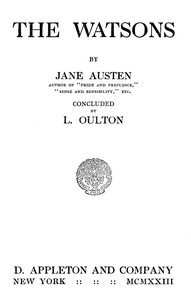
The Watsons: By Jane Austen, Concluded by L. Oulton — A Closer Reading
Historical Psychological Social Fiction
39,040 recorded words. 0 minutes difference from this book's estimate.
View Gutenberg source #63569
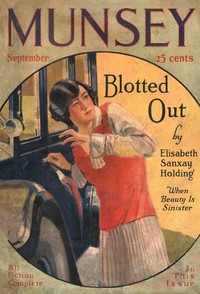
The source record for Blotted Out — Inside the Classic measures this digital text at 39,034 words, 2 hr 50 min estimated reading time, and 4 detected text sections.
The text analysis averages about 11.8 words per sentence, while the detected sections provide another way to judge how the source is divided.
Project Gutenberg metadata also associates the work with “Young men -- Fiction,” connecting these edition facts with the source record’s subject description.
Explore this collection
These alternatives are selected using recorded categories and estimated reading time.
About 170 minutes
Historical Psychological Social Fiction
39,040 recorded words. 0 minutes difference from this book's estimate.
View Gutenberg source #63569About 169 minutes
Historical Psychological Social Fiction
38,821 recorded words. 1 minutes difference from this book's estimate.
View Gutenberg source #64892About 165 minutes
Historical Psychological Social Fiction
37,845 recorded words. 5 minutes difference from this book's estimate.
View Gutenberg source #65566Search stored excerpts and compare books → Choose by your preferences →
Choices use stored catalog measurements. Estimates vary with reading speed. A shared category is a catalog label, not a claim that two books have the same argument or literary quality.
Search reads excerpt text stored with this catalog and links to its associated Gutenberg record. The connection is stored in the site database; this tool does not recheck that every excerpt is word-for-word identical to that external record. Excerpt search does not cover every chapter and does not verify historical publication dates.
Catalog snapshot checked: 2026-09-25. Coverage: 92 public books, 92 available source excerpts.
Calculated from edition completeness, EPUB availability, text structure and catalogue metadata. Not a user rating.
Total of 100 points, scaled to a 2.5-5.0 range. Editions with an empty description or a missing EPUB file are not scored.
Public-domain source text
The source text is kept in the dedicated reader, separate from this catalogue record and its commentary.
Elisabeth Sanxay Holding opens Blotted Out with a scene of deliberate solitude: James Ross stands alone on a rainy deck, savoring his isolation and freedom from human connection. The narrative voice is precise and ironic, noting how Mrs. Barron has “marked him down” and how Ross outmaneuvers her social advances. This early passage establishes a protagonist who values autonomy above all, yet the prose undercuts his confidence—Phyllis Barron’s “quiet, thoughtful little face” already disturbs his peace. The catalog subjects list “Young men -- Fiction” and “Man-woman relationships,” but the excerpts focus less on romance than on Ross’s internal resistance to entanglement. The mystery element emerges not from a crime but from a locked-room puzzle: a baby appears in his apartment, and his assistant Eddy behaves suspiciously. Holding builds suspense through Ross’s fatigue and confusion, not through plot mechanics.
James Ross is introduced as a man actively escaping connection. The opening paragraph emphasizes his “feeling of complete isolation and freedom” and his determination to “remain alone.” He evades Mrs. Barron’s social advances and deliberately avoids Phyllis, whose presence gives him “a sort of qualm.” This pattern of avoidance shapes the narrative: Ross’s choices are driven by a desire to remain unencumbered. The excerpts show him repeatedly choosing solitude, yet the plot forces encounters upon him. The baby’s appearance in his locked apartment is a direct challenge to his control. Holding uses Ross’s internal monologue to reveal his discomfort with intimacy, making the psychological conflict more central than any external mystery.
Holding builds tension through sensory details that reflect Ross’s state of mind. The opening scene uses cold rain and wind to underscore his isolation. Later, a snowstorm transforms the setting: “Thick and fast the flakes went spinning by… all the world was white. White and unimaginably still.” Ross, seeing snow for the first time, experiences “the odd tingle in the air, the sense of hushed expectancy.” These descriptions do more than set a scene; they mirror his disorientation. The snow’s stillness contrasts with his inner turmoil. Similarly, the sound of someone unlocking the door at night, the “faintest echo of his own sigh,” and Eddy’s “haggard and white” face all contribute to a mood of unease. The physical environment becomes an extension of the protagonist’s psychological state.
Ross’s perceptions are repeatedly shown to be incomplete. He assumes the baby appeared through supernatural means, but quickly suspects Eddy has a key. Eddy’s reactions—his “tone of amazement” that seems forced, his evasive questions—hint at knowledge he conceals. Ross observes Eddy’s “attitude of misery and dejection” and feels “a little thread of pity, of regret and pain” in his dreams, suggesting subconscious awareness of something darker. The narrative withholds information, aligning the reader with Ross’s limited viewpoint. The catalog subject “Mystery fiction” applies, but the mystery is not a traditional whodunit; it is a puzzle of character and motive. Holding uses gaps in Ross’s understanding to create suspense, leaving the reader to question what Eddy knows and what Ross is failing to see.
Blotted Out rewards attention to its psychological undercurrents and atmospheric detail. Readers should note how Holding uses setting and sensory description to externalize the protagonist’s inner conflict. The mystery of the child and Eddy’s behavior is best approached as a catalyst for character revelation rather than a puzzle to be solved. The excerpts suggest a novel more concerned with the cost of isolation than with conventional plot resolution.
Reading Blotted Out, I kept thinking about that stubborn quiet in James Ross, how isolation feels less like a choice and more like a second skin. It reminded me of a similar ache in The Great Accident — Themes and Context, where lives also unravel in half-light. Strange, how two stories can share that same lonely weather.
Save your reaction, strongest insight, and memorable passage.