About 225 minutes
Legend — A Reader’s Guide
Historical Psychological Social Fiction
51,590 recorded words. 8 minutes difference from this book's estimate.
View Gutenberg source #63775
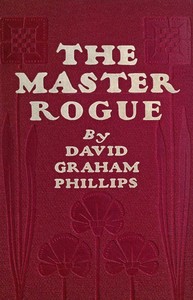
Before opening The Master Rogue: The Confessions of a Croesus — Key Ideas to Explore, the edition data offers a quick orientation: 49,772 words, 3 hr 37 min estimated reading time, and 12 detected text sections.
The text analysis averages about 17.9 words per sentence, while the detected sections provide another way to judge how the source is divided.
Project Gutenberg metadata also associates the work with “United States -- Social life and customs -- Fiction,” connecting these edition facts with the source record’s subject description.
Explore this collection
These alternatives are selected using recorded categories and estimated reading time.
About 225 minutes
Historical Psychological Social Fiction
51,590 recorded words. 8 minutes difference from this book's estimate.
View Gutenberg source #63775About 205 minutes
Historical Psychological Social Fiction
47,061 recorded words. 12 minutes difference from this book's estimate.
View Gutenberg source #62219About 243 minutes
Historical Psychological Social Fiction
55,844 recorded words. 26 minutes difference from this book's estimate.
View Gutenberg source #63580Search stored excerpts and compare books → Choose by your preferences →
Choices use stored catalog measurements. Estimates vary with reading speed. A shared category is a catalog label, not a claim that two books have the same argument or literary quality.
Search reads excerpt text stored with this catalog and links to its associated Gutenberg record. The connection is stored in the site database; this tool does not recheck that every excerpt is word-for-word identical to that external record. Excerpt search does not cover every chapter and does not verify historical publication dates.
Catalog snapshot checked: 2026-09-25. Coverage: 92 public books, 92 available source excerpts.
Calculated from edition completeness, EPUB availability, text structure and catalogue metadata. Not a user rating.
Total of 100 points, scaled to a 2.5-5.0 range. Editions with an empty description or a missing EPUB file are not scored.
Public-domain source text
The source text is kept in the dedicated reader, separate from this catalogue record and its commentary.
The narrator of The Master Rogue opens with a startling claim: he cannot remember a time when he was not absolutely certain he would be a millionaire. This certainty, he insists, is not a dream but knowledge—a conviction that the millionaire is the only citizen universally envied and honored. The confession that follows is less a moral reckoning than a self-justifying account of how a man of “definite, serious purpose” clears the road of lesser competitors.
David Graham Phillips structures the narrative as a retrospective monologue, allowing the speaker to frame his own rise and fall. The excerpts show a voice that oscillates between pride in his achievements and irritation at those who fail to appreciate his greatness. The tension between self-regard and public perception becomes the engine of the story.
The narrator’s early life is presented as a series of foregone conclusions. He recalls that from boyhood he saw the millionaire as the only truly honored citizen, and he resolved to join that class. His language is emphatic: “I didn’t dream; I knew.” This certainty is not merely confidence but a kind of secular predestination. He describes the road to success as “almost empty” because so few can form and persist in a serious purpose.
By thirty-three, he is general manager of a dry-goods house at ten thousand a year, with sixty thousand dollars saved. He owns a brownstone house and has a wife who “knows how to make home attractive.” Yet even in this comfortable portrait, a note of calculation appears: he values his family for making life “cheerful and comfortable,” but insists he would have gone just as far without them. The confession is already revealing a mind that measures everything by utility.
The centerpiece of the excerpts is a public celebration in the narrator’s honor—a parade with six horses, bunting, arches, and cheering crowds. He stands hat in hand, bowing, as bells ring and cannons boom. Yet the triumph is short-lived. At the evening banquet, enthusiasm flags; many seats are empty. The speeches are halting, and the narrator’s own address receives faint applause.
The cause is a newspaper exposé of his manipulation of freight rates to gain control of mines and factories. The narrator admits the “basic facts were practically true,” but objects to the “worst possible colour” given them. The episode illustrates a pattern: the narrator craves public validation, but his methods ensure that validation will be fragile. The gap between his self-image and the public’s judgment is the central conflict.
Throughout the excerpts, the narrator’s tone is that of a man arguing his case. He describes his “self-respecting opinion” of himself and laments that a “too close view” obscured his true stature. The celebration, he says, let him see himself “as others see me”—but what he saw was a figure of greatness, not the rogue others perceived.
His language is revealing: he speaks of “inferiority of other men” and the “superiority of my own mind and judgment.” Even when recounting the fiasco, he blames an “act of malicious and mendacious demagoguery” rather than his own actions. The confession is thus a performance—an attempt to control the narrative. Readers must weigh his words against the facts he inadvertently admits.
Phillips’s novel is a study in unreliable narration, where the speaker’s certainty becomes the reader’s clue. Pay attention to what the narrator emphasizes and what he glosses over; his justifications often reveal more than he intends. The excerpts suggest a work less concerned with the mechanics of wealth than with the psychology of a man who believes he deserves it.
I remember sitting with my grandfather’s ledgers, smelling the dust of his failed store. That Croesus’s confession—the hunger that looks like triumph, then the quiet scandal of it—stirred something familiar. Later, in The God of Civilization: A Romance — Background and Themes, I found that same ache: ambition dressed as progress, leaving a hollow where a home should be. Both left me wondering if wealth is ever worth the price of the waking conscience.
Your answers remain private and are stored only in this browser.