
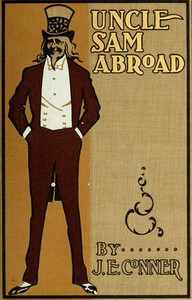
Uncle Sam Abroad by Jacob Elon Conner
Jacob Elon Conner's Uncle Sam Abroad isn't a dry history lesson. Published in 1920, it's a full-throated, passionate argument against American imperialism in the wake of the Spanish-American War. Conner writes with the fire of a reformer, examining how the United States engaged with the world from the late 1800s through World War I.
The Story
The book doesn't follow a single narrative. Instead, Conner takes us on a tour of America's foreign entanglements. He looks at the annexation of Hawaii, the long occupation of the Philippines, and the frequent military interventions in Latin American countries like Nicaragua and Haiti. For each case, he lays out the official reasons given by the U.S. government—often about spreading democracy or protecting business interests—and then contrasts them sharply with the on-the-ground reality of control and domination. The 'story' is the unfolding pattern he sees: a young republic slowly adopting the habits of the European empires it once scorned.
Why You Should Read It
You should read this for the perspective. It's a primary source, a view from inside the storm of the early 1900s. Conner isn't a detached scholar; he's angry and urgent. Reading him today is fascinating because so many of the debates he engages in—about intervention, national interest, and America's moral authority—are still with us. His voice gives the history a raw, immediate feel. You're not just learning what happened; you're feeling the controversy of the moment. It also serves as a crucial reminder that questioning U.S. foreign policy isn't a new phenomenon—it's as old as the policy itself.
Final Verdict
This book is perfect for history buffs and political readers who want to go beyond simple timelines and understand the fierce debates of the past. It's also great for anyone interested in the roots of modern American foreign policy. Be warned: it's a dense, argument-driven book, not a light novel. But if you're willing to sit with Conner's forceful prose, you'll be rewarded with a challenging and deeply insightful look at a pivotal era. Think of it as a long-form op-ed from a century ago that still has the power to make you think.
There are no legal restrictions on this material. Distribute this work to help spread literacy.
Ethan Allen
1 year agoWow.
Mason Nguyen
5 months agoHelped me clear up some confusion on the topic.
Oliver Smith
1 year agoHonestly, the content flows smoothly from one chapter to the next. This story will stay with me.
Michelle Perez
1 year agoVery interesting perspective.
Kimberly Harris
1 year agoA brilliant read that I finished in one sitting.