
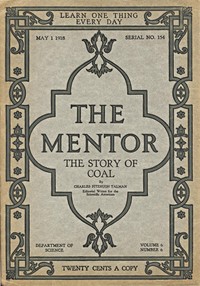
The Mentor: The Story of Coal, vol. 6, Num. 6, Serial No. 154, May 1, 1918
Let's be clear: this isn't a novel. 'The Mentor: The Story of Coal' is exactly what it sounds like—an educational magazine from 1918. But Talman, the author, structures it with a clever, almost Socratic dialogue that gives it a real pulse.
The Story
The whole thing is a conversation. A young, eager man meets with his older, experienced mentor to learn about coal. The student is dazzled. He talks about coal powering ships and trains, lighting cities, and forging steel. He sees it as the heroic engine that won the war and built modern America. The mentor, though, agrees with all the facts but tells a different story with them. He guides the student to think about the miners—the dangers they face, the communities that live and die with the pits. He points out the smoke-choked skies and the landscapes scarred by mining. He doesn't yell or preach; he just lays out the other side of the coin, asking if the price is worth the power.
Why You Should Read It
Reading this in the 21st century is a trip. You're peeking into the mind of 1918, right when America's industrial might was undeniable but its consequences were becoming impossible to ignore. The student's voice is the booming optimism of the era. The mentor's voice feels prophetic, like he's seeing the climate and labor debates we're still having today. It's short, so the argument is crisp and focused. You can feel Talman wrestling with it himself—proud of what industry built, but deeply worried about what it was breaking in the process. It turns a simple topic into a real moral question.
Final Verdict
This is a niche read, but a fascinating one. It's perfect for history buffs who want to feel the anxieties of the WWI era, not just the dates and battles. It's great for anyone interested in the roots of our environmental or economic debates—seeing where they started is startling. If you enjoy primary sources that read more like a quiet argument than a textbook, you'll get a lot out of this. Just don't go in expecting a thriller; the drama here is all in the ideas.
This text is dedicated to the public domain. Use this text in your own projects freely.
Matthew White
1 month agoI wanted to compare this perspective with traditional views, the cross-referencing of different chapters makes it a great study tool. A mandatory read for anyone in this industry.
Thomas Thompson
10 months agoI stumbled upon this title during my weekend research and the practical checklists included are a great touch for real-world use. I'm glad I chose this over the other alternatives.
Nancy Perez
1 year agoI stumbled upon this title during my weekend research and the practical checklists included are a great touch for real-world use. It cleared up a lot of the confusion I had previously.
William Gonzalez
11 months agoSolid information without the usual fluff.

Jennifer Taylor
1 year agoThis is an essential addition to any academic digital library.