
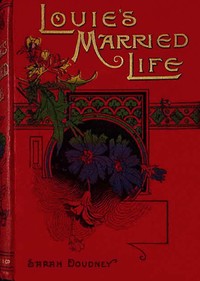
Louie's married life by Sarah Doudney
I picked up this 19th-century novel expecting a simple domestic tale, but found something much more thoughtful. Sarah Doudney, writing in the 1870s, gives us a story that feels honest about marriage in a way that still rings true.
The Story
We meet Louie as a bright, hopeful young woman. She marries a good man, full of love and idealistic dreams about their future together. But after the wedding, reality sets in. Her husband is kind but often absent, wrapped up in his work. Louie is left in their comfortable home, surrounded by domestic routines that start to feel like a cage. There's no dramatic villain or scandal—the conflict is in the quiet moments. It's the loneliness of a long afternoon, the weight of unspoken expectations, and the slow realization that being a 'good wife' might mean shrinking parts of yourself. The story follows her as she grapples with these feelings, trying to find purpose and a sense of self within the strict boundaries of her time.
Why You Should Read It
What struck me most was how recognizable Louie feels. Her struggle isn't about poverty or abuse; it's about the subtle confinement of a comfortable life. Doudney writes with real empathy about the emotional landscape of a marriage. She shows how small misunderstandings can pile up and how love needs constant attention to survive daily routine. Louie isn't a rebel in the modern sense, but her internal journey—questioning her happiness, seeking meaning—feels quietly radical for her era. The book doesn't offer easy answers, which makes it feel genuine. It’s a character study that makes you think about your own relationships and the compromises we all make.
Final Verdict
This is a perfect pick for readers who love character-driven stories and historical fiction that focuses on inner life over big events. If you enjoyed the domestic insights of authors like Jane Austen or Elizabeth Gaskell, but wanted a closer look at the marital realities they often hinted at, you'll appreciate Doudney's clear-eyed perspective. It’s also a great, accessible entry point into Victorian literature—it’s not overly long or dense. Just be ready for a story that’s more about emotional truth than plot twists. I’d call it a thoughtful, understated novel about the first year of marriage that has somehow stayed relevant for 150 years.
This historical work is free of copyright protections. Distribute this work to help spread literacy.
Elijah Scott
2 years agoComprehensive and well-researched.
Jessica Davis
1 year agoA must-have for anyone studying this subject.
Lisa Hill
1 year agoWow.
Kevin Martinez
1 year agoA must-have for anyone studying this subject.
Patricia Hernandez
1 month agoA brilliant read that I finished in one sitting.