B
Bunthay Cheam
Guest
- Thread Author
- #1
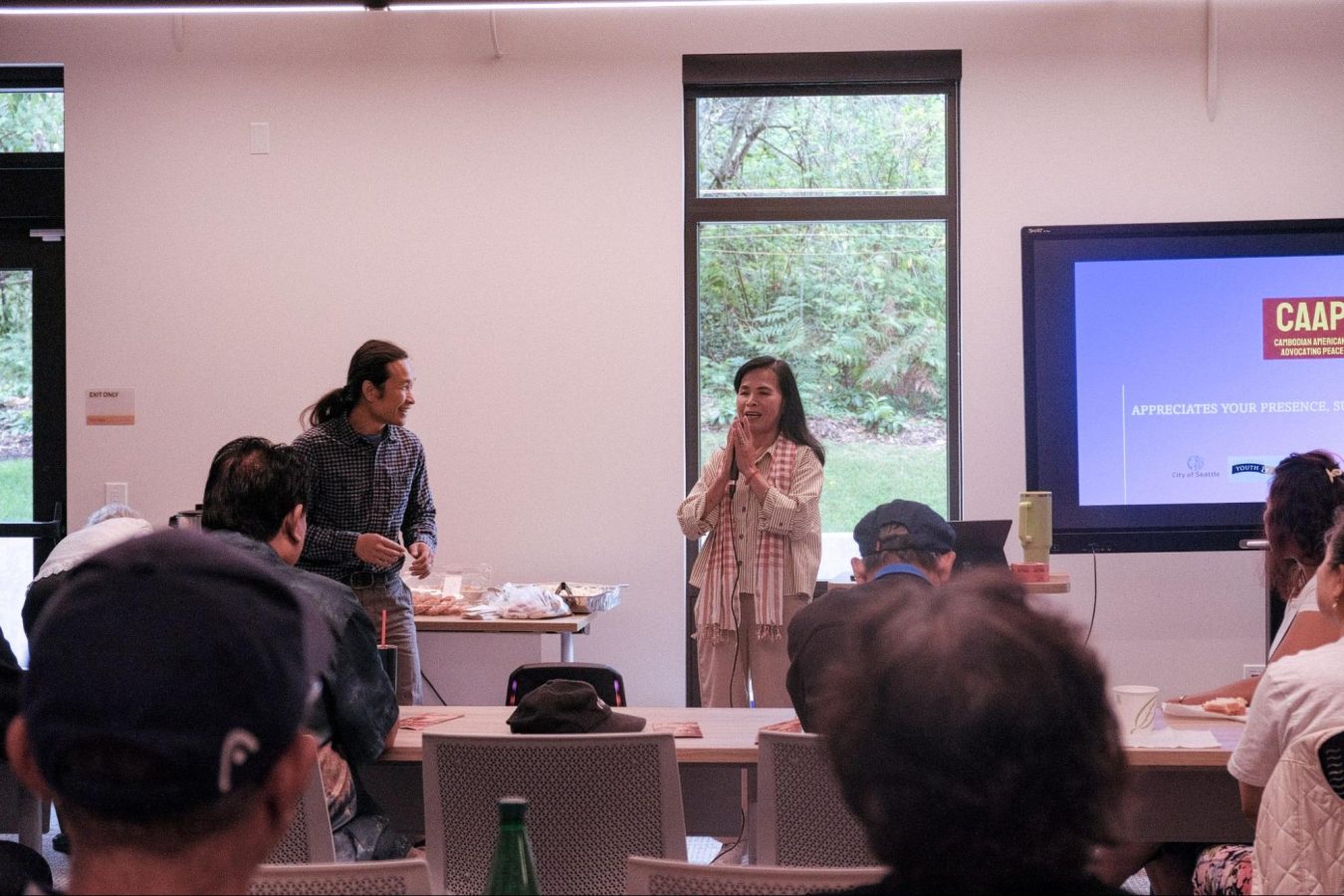
Jenny Ap of Cambodian Americans Advocating for Peace (CAAP) share immigration resources with
Cambodian elders a weekly communal gather. Photo by Bunthay Cheam
Nearly half of all deportations to Laos, Vietnam and Cambodia recorded since 1998 have happened in just the past two years, according to new data from the Southeast Asia Resource Action Center (SEARAC) and AAPI Data — a spike that community organizers say is reshaping life for Khmu, Iu Mien, Khmer, Lao, Vietnamese and other Southeast Asians across the country.
Forty-two percent of all deportations to Southeast Asia between 1998 and 2026 occurred in fiscal years 2025 and 2026 alone — 1,852 people, up from just 209 during the previous four years under the previous administration. The increase has hit some communities harder than others: 64% of all deportations to Laos and 51% of all deportations to Vietnam since 1998 occurred in this same two-year window.
More than three million Southeast Asians live in the United States, less than 1% of the US population. Most are refugees or the children of refugees who fled Cambodia, Laos, and Vietnam from the U.S. wars in Southeast Asia during the latter half of the 20th century. The Southeast Asian community’s history of displacement and resettlement in under-resourced communities has left it uniquely exposed and vulnerable to immigration enforcement.
The data show elders bearing a disproportionate share of the recent surge. Just nine Southeast Asian elders age 55 or older were deported in fiscal year 2024. In fiscal year 2025 alone, that number rose to 182 — a more than 20-fold increase in a single year — and climbed further to 251 in fiscal year 2026.
“The fear is increasing,” said Jenny Ap, an organizer for Cambodian American Advocating for Peace (CAAP). “They used to go out more before. Now they don’t want to go out. Even routine outings have changed — families that once went out to eat or run errands on Friday evenings are staying home, and many avoid large group gatherings altogether.”
As part of their organizing, Ap attends a Cambodian elder communal space supported by the Southwest Youth and Family Services. A $10,000 grant from the City of Seattle’s Office of Immigrant and Refugee Affairs has helped Ap bring in more immigration resources and information.
Presentations on Know Your Rights and family safety planning are woven in alongside health and nutrition information. The same message often needs repeating before it takes hold, “Sometimes you hear it one time, they don’t register,” Ap said. “So multiple times, it’s still good to discuss.”
The convictions driving many of these cases are old. Among Southeast Asians deported in fiscal years 2025 and 2026, 78.6% had a conviction at least a decade old, and 53.3% had one that was at least two decades old. Fifty-eight percent of Cambodians, 57% of Laotians, and 50% of Vietnamese deported with a conviction had one that was more than 20 years old.
A significant driver of the increase among Vietnamese deportees traces back to a 2008 agreement between the United States and Vietnam that had shielded refugees who arrived before July 12, 1995, from deportation. Those protections were eliminated in a 2020 memorandum of understanding negotiated during the first Trump administration.
Pre-1995 arrivals made up just 2% of Vietnamese deportees in fiscal year 2024. By fiscal year 2025, that figure had jumped to 37%, and it rose again to 41% in fiscal year 2026.
Sieng Douangdala, who works with the Seattle-based Kandelia, said many long-term residents don’t even know they’re at risk until it’s too late. “A lot of the Southeast Asian communities have had removal orders in the ’90s and early 2000s that are now being affected — without them even knowing,” she said. “A lot of folks don’t even know that they had a removal order until they go check in, and that’s when they find out.”
According to the SEARAC/AAPI Data fact sheet, 19,216 Southeast Asian Americans have been ordered removed since 1998, and an estimated 14,788 remain in the United States living under a final order of removal. 76% of all deportation orders to Laos, Vietnam and Cambodia stem from contact with the school to prison to deportation pipeline.
Locally, immigration enforcement expansion has direct implications for the local Southeast Asian community: ICE has moved to roughly double its detention capacity in the greater Seattle area, according to a December 2025 federal presolicitation notice.
The University of Washington Center for Human Rights (UWCHR), has tracked a “powerful surge” in immigration enforcement across Washington state, with monthly ICE arrests statewide climbing from fewer than 100 early in 2025 to more than 400 by October and November of that year. The center found the largest county-level increases in King, Yakima, and Clark counties.
The center has also documented more severe cases. In a separate report, UWCHR Director Angelina Godoy detailed 16 cases connected to Washington state that researchers say meet the international legal definition of “enforced disappearance” — arrests in which family members went days or weeks without knowing where a detained loved one was being held. Separately, UWCHR’s ongoing investigation into Washington’s Department of Licensing has confirmed dozens of cases in which federal agents used state driver data to locate and arrest immigrants, a number researchers say has continued to climb even after state officials pledged to restrict such access.
For families in Cambodian, Laotian, and Vietnamese communities across the state, the local data reinforces what the Southeast Asian communities have described anecdotally – an enforcement climate that has intensified sharply and unpredictably over the past year.
On a warm September Thursday, Rooted Community hosted “Rooted & Rising,” an event at a local church in Rainier Valley, bringing in resources for Iu Mien, Khmu and Lao elders – communities that have seen some of the most aggressive immigration enforcement in the last year. The event was co-hosted by Kandelia, Khmer Anti-deportation Advocacy Group and the Lao Senior Center.
“We just want to build community,” said Oloth Insyxiengmay, Rooted Community founder and organizer with the Asian Pacific Islander Cultural Awareness Group (APICAG) said. “That’s the most important thing about this event — bring folks together under one common cause.”
Resources provided and presenters at the event included Tangol Migrante, International Migrants Alliance, Northwest Immigrants Rights Project, Sông2Sea and the Legal Council for Youth and Children.
Douangdala, who also helped organize the event, said the gathering reflected how widely the current wave of enforcement is being felt, not just in the Southeast Asian community but more broadly. “Our Southeast Asian community, our Filipinos, our Spanish-speaking communities, are being taken off the streets because of things that are out of their control,” she said.
For Douangdala, the work is also personal. “My brother was detained [this year]… my other brother also has a removal order,” she said. “It has taken me personally and professionally to be able to be in this work with boots on the ground — to share my story and be vulnerable so that it can help other people know the truth.”
She underscored that gatherings like these are as much emotional as practical, particularly for elders. “Being able to be in community, and to look at one another, and to break bread, and to know that we are all in this together — is truly filling their soul with hope and some joy.”
Interested in learning more? SEARAC’s policy responses include:
- Southeast Asian Deportation Relief Act, which would provide deportation relief, work authorization, and a pathway for eligible deported individuals to return to the United States.
- New Way Forward Act, which would end mandatory detention, ban for-profit detention facilities, limit deportation grounds, and bar state and local law enforcement from conducting immigration enforcement.
Sources:
Southeast Asia Resource Action Center (SEARAC) and AAPI Data, “Southeast Asian Deportations: Trends and Policy Implications” fact sheet, the University of Washington Center for Human Rights
The post Deportations to Laos, Vietnam and Cambodia surge nearly nine-fold, targeting elders and decades-old removal orders appeared first on International Examiner.