D
David Yamaguchi
Guest
- Thread Author
- #1
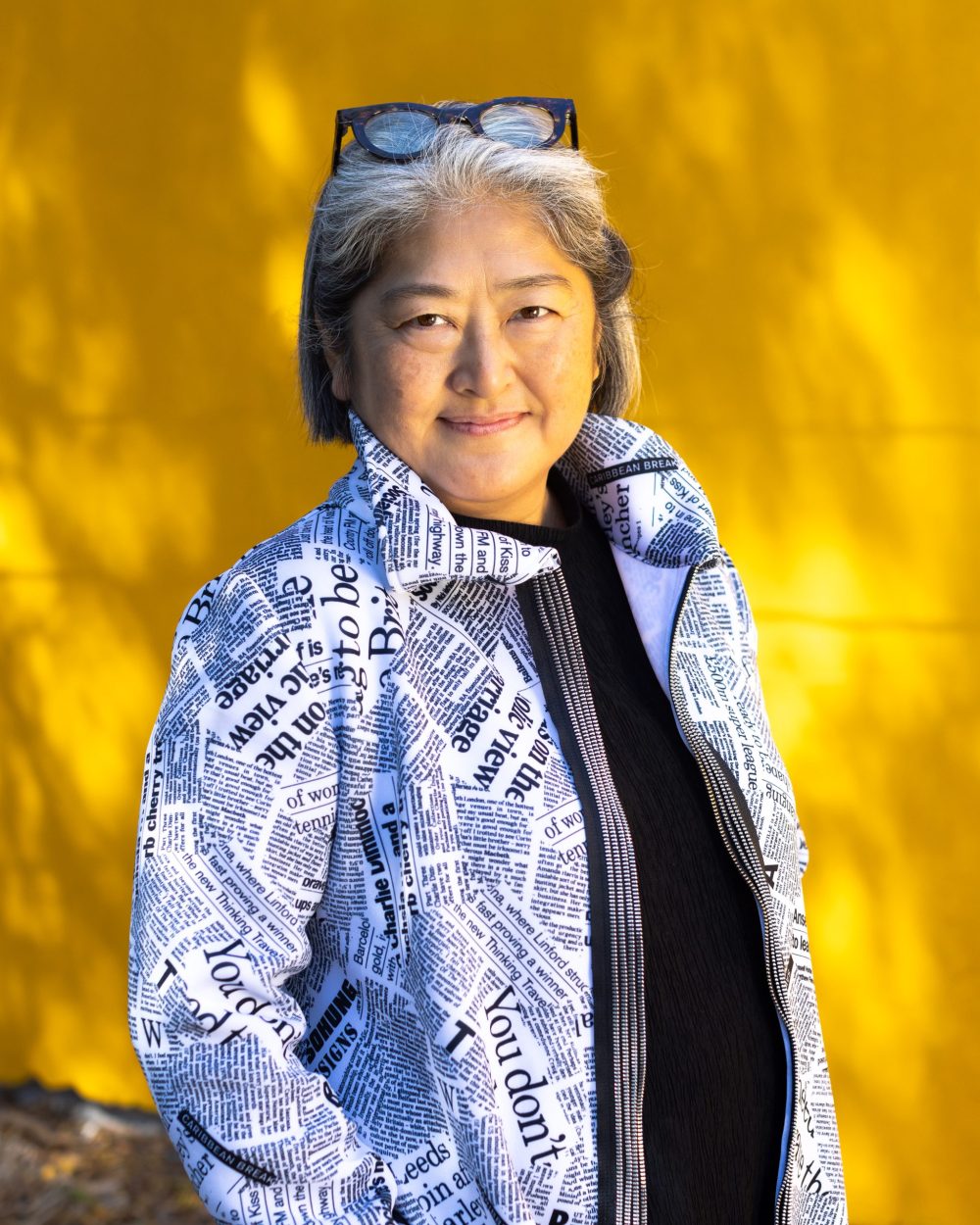
Yuko Kodama. Photo by Nate Gowdy
Yuko Kodama will receive the Leadership in Journalism Award at the International Examiner’s 2026 Community Voice Awards. Please join us in-person, on October 22, 2026, to celebrate her and other community leaders.
Yuko Kodama is a reporter at the South Seattle Emerald, where she previously worked as news editor during 2024 and 2025. She seems to be the right person in her job, for a transformative early career experience for her was working as a Sound Transit community liaison for Beacon Hill and the Rainier Valley in the 1990s. Moreover, her parents are immigrants and she is a Seattle transplant; these give her shared perspectives with many readers. Today, Yuko has 35 years of community journalism experience; she is known for her stories reflecting underreported minority and disability perspectives. For example, her August story, “Consider where you park an e-bike…” gently reminds us that leaving e-bikes in disarray impedes the mobility of blind walkers.
International Examiner: The internet says that you grew up in Utah. How did that happen?
Yuko Kodama: My dad came to the U.S. from Japan in 1952. He arrived by boat in Seattle on his way to Michigan, where he studied inorganic chemistry. I imagine him being processed for immigration at the former INS (Immigration & Naturalization Service) building in the C-ID, which is now Inscape Arts, before continuing his journey. He said all he traveled with were some books, a couple of shirts, and a toothbrush and pencil in his shirt pocket. He made good friends at the University of Michigan at Ann Arbor while he studied, and one of them became the department chair for Chemistry at University of Utah. My father’s friend invited my dad to teach there.
We were the only non-Mormon and non-white-presenting family in our neighborhood. My experience of growing up in Utah was of being on the fringes, watching people around me.
IE: You previously worked extensively in radio but are now working for a community print and video newspaper. How does preparing or editing a story in sound, print and video differ?
YK: I worked in radio for 35 years before moving into print. I haven’t really worked in video yet. I have just dabbled in some social media video. I’ve been asked to take photos for my stories at the Emerald which has been a new medium for me.
What I miss in audio work is the personality and emotion that comes through in people’s voices, making it feel like a more direct connection to the person with the lived experience. As I’ve settled into writing, I see the power of the written word and photos as an immediately accessible record of these times.
The approach to working with audio and print stories is generally not too different since writing is a big part of both mediums. I still usually audio record interviews, listen back for good quotes and then work the story.
Hyperlinks are a powerful part of online print media, offering more background for readers who want to dive into more information. And when I want to capture the tone of a setting or feeling of an interview that a mic would pick up easily, I consider using words to describe how the person I interviewed paused before continuing with the next sentence or other details that help the reader feel like they were there with me.
IE: Are young people today interested in community journalism? How many writers do you work with in a typical month that are under age 35? Do you see the field as having a future?
YK: Since I’m a reporter and no longer an editor at the Emerald, and because I haven’t been working with students as I did at KBCS radio, I haven’t worked closely with younger people lately.
That said, I’m encouraged by the young people who are writing for the Emerald and whose numbers have been steady since I’ve worked there. High school students have written some of my favorite articles there. I attribute this to the dynamic Emerald articles that reflect the community, written by people who are knowledgeable and connected to the community they write about. Also, the leadership, managing editor, writers, photographers, and production folks are nearly all people of color with diverse lived experiences. They are compassionate as much as they are wickedly skilled at their work. This creates a great environment for young writers. The Emerald also has an active social media presence, which adds to distribution of the content to a younger and more diverse audience.
IE: The internet says that when you’re not working, you enjoy outdoor foraging, which I interpret as activities including hunting matsutake mushrooms. Where are your favorite mushrooming areas?
YK: I like to gather mushrooms, including matsutake (in the North Cascades), chanterelles, and morels — but lately, it’s become more of a gathering of them when I come across them, as I’m interested in gathering other things, too. That way, the pressure’s off of feeling the need to come home with bags of mushrooms. Sometimes, searching solely for matsutake felt like it was taking me away from noticing other things in the forest. Foraging to me also means digging up a burdock root or gathering dock seeds, purslane, sea beans, acorns, or oysters, limpets, seaweed, and the list goes on.
I’ve been fortunate to have friends and family who like foraging and also work with medicinal plants. Being closer to what we eat and what heals us brings us closer to understanding the wisdom of plant and animal people and the importance of stewardship of our environment, since it’s the natural world that sustains us.
The post CVA 2026: Yuko Kodama’s journalism collects personal stories, uplifts underrepresented voices appeared first on International Examiner.