J
Jill Wasberg
Guest
- Thread Author
- #1
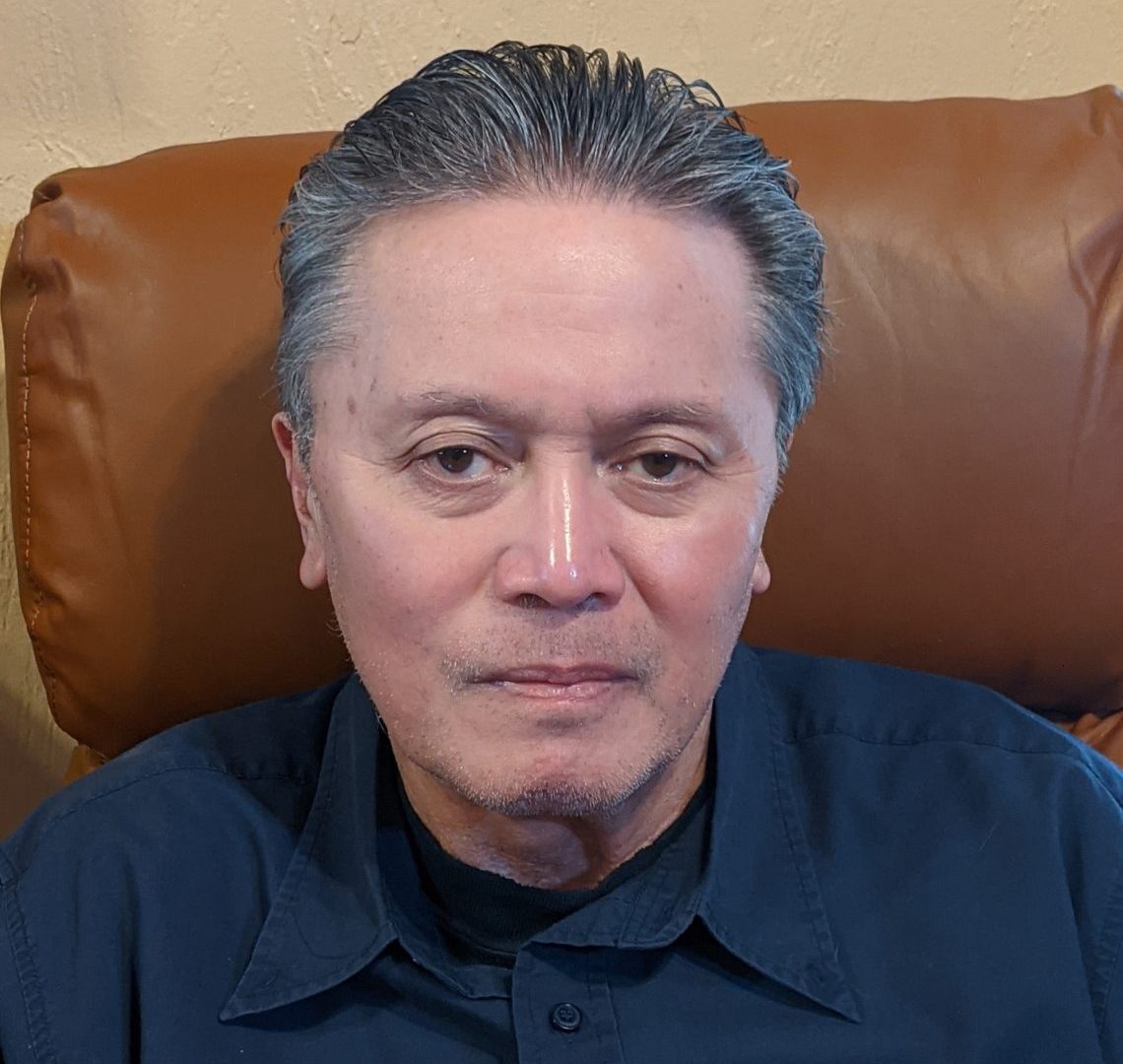
Peter Bacho. Courtesy image
Peter Bacho will receive the Lifetime Achievement Award at the International Examiner’s 2026 Community Voice Awards. Please join us in-person, on October 22, 2026, to celebrate him and other community leaders.
Peter Bacho is a novelist, instructor, attorney, journalist, historian and activist in his own medium. A son of the Central District and the CID, Bacho spent formative childhood and adult years in and around the neighborhoods, gleaning inspiration for the plot lines, settings, characters and story arcs for his writing across a career of seven books so far. Here’s hoping to more. His debut novel Cebu, published in 1991, won the American Book Award in 1992. His next novel published in 1996, Dark Blue Suit, won the 1998 Washington State Book Award (then called the Washington Governor’s Writers Award).
Bacho took time to answer some questions over email with the International Examiner in late September.
International Examiner: What are you currently paying attention to that is shaping your writing and inspiring you?
Peter Bacho: I like the smaller stories, the explorations of everyday affairs, the subtlety of words that trigger emotional reactions. Two of my favorites are Bienvenido Santos in Scent of Apples and Faye Ng in Bone.
IE: We are firmly immersed in an era of very short attention-span digital social media consumption, a here-today-gone-tomorrow state of mind. How can writers continue to preserve history and tell long-form stories in this era?
PB: To be curious, to be skeptical of the junk that is out there, to maintain the ability to think critically – which is the most important skill higher education can impart. So, I go to sources that I know have been vetted, like the NYT, the LA Times, the Seattle Times, the International Examiner. I continue to read books on eras I am unfamiliar with – like a current one on the Crimean War. These sources do not publish junk.
Heck, I don’t even have a cell phone – so, less of an opportunity to become infected and ignorant.
IE: You’ve been quoted on the college’s website that the Evergreen State College is the most unique institution in your teaching career. What about Evergreen’s approach to education and learning appeals to you as an instructor? Does it contribute to your writing process at all?
PB: For the most part, I will not criticize a person’s opinion, as long as it is based on verifiable facts. This is part of the process of developing critical thinking skills. For example, I would vote for a B&O tax increase if it goes toward funding education or some other area that I support. However, I would not criticize a business owner if he or she opposed it; after all, the owner bears the burden and his or her position is at least rational.
[Teaching at Evergreen] contributes to the writing process – when I am in writing mode – because a lot of my students are adult learners. People who have lived challenging lives. I teach them, but I also learn from them, and when I am working on, say, a fiction project, elements of what I have learned may pop up.
IE: You were very involved in teaching young people martial arts and boxing here in the CID. What inspired you to do that and how did you get into it?
PB: Watching Bruce Lee on the Green Hornet. My pal Puggy Aspiras said I should catch this cat Bruce, and sure enough, I was impressed. Then I read an article in one of the papers saying that Bruce was in town and making the media rounds with his student, the late Taky Kimura. I asked around and visited Taky at his grocery store on First Hill, and he invited me to join. That was in 1967, and I trained there until 1980.
A small group of us also added boxing (and some wrestling) to the training. Those sessions could be fierce, especially if it was against someone from another gym – black eyes, knockdowns, etc. Bruce was big on realistic training, and there is nothing more realistic than dealing with an opponent going full bore and wanting to separate you from your senses.
You know, the guys of my era tended to view the world as suspicious, potentially hostile, and we needed to know how to respond. (Or maybe it was just a guy thing of whatever era?) Realistic training gave us that – a sense of calmness, competence and confidence. in any confrontation, we would have a chance to survive – and I think that that is the most that we can ever hope for.
The post CVA 2026: Novelist, college instructor, and martial artist Peter Bacho urges us to sharpen our curiosity appeared first on International Examiner.