M
Maria Batayola
Guest
- Thread Author
- #1
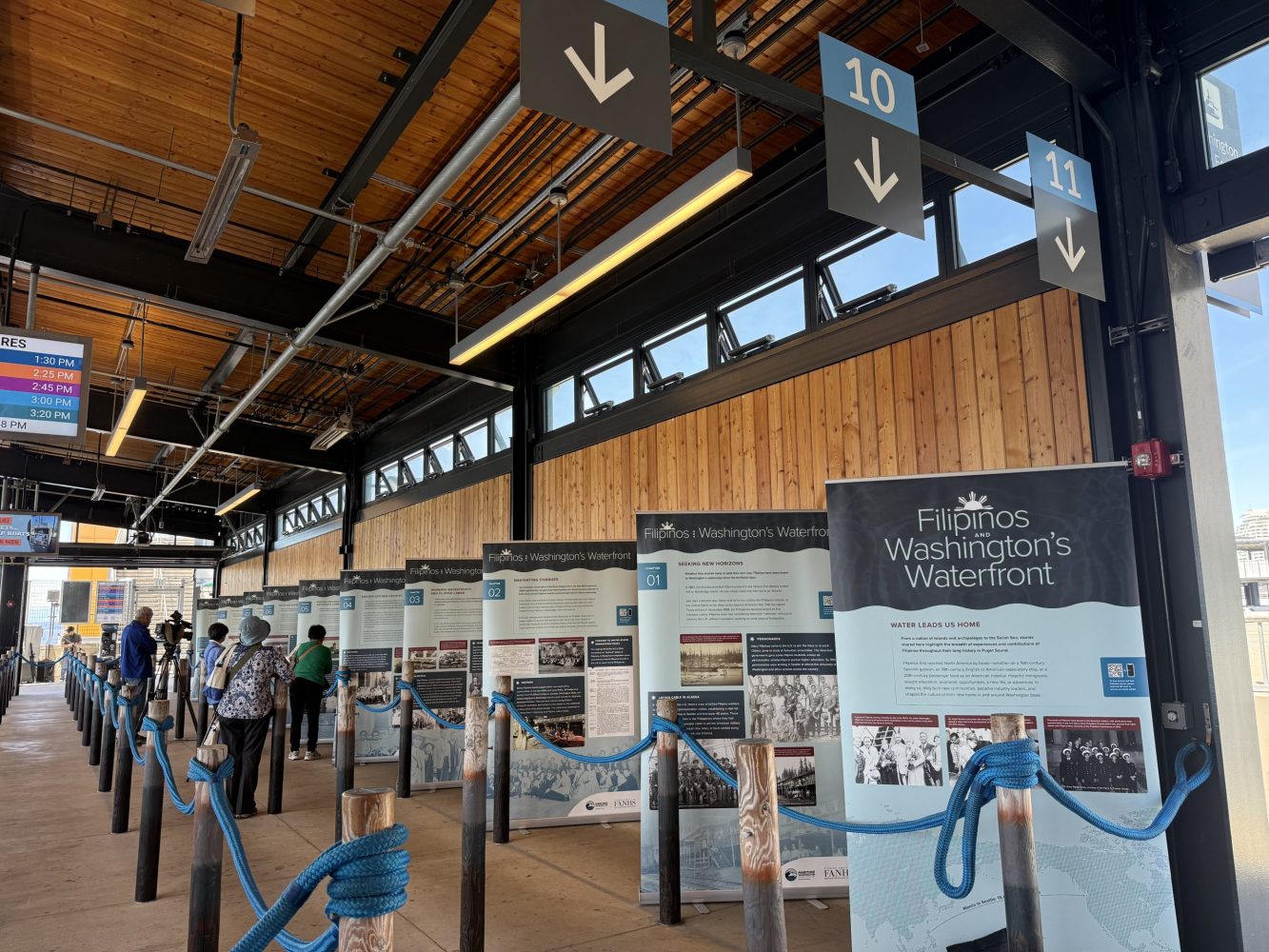
Photo by Maria Batayola
Every so often, our beloved FANHS (Filipino American National Historical Society) founder, activist and long-time executive director, Auntie Dorothy (Dr. Dorothy Laigo Cordova) would talk about what it takes to be a historian — rabid curiosity, digging persistently, and holding on to bits and pieces of paper that may not be significant on their own, but later, with increased knowledge and deepened sensibilities, might present a pattern, a theory or a possible interpretation. I believe I am in that space right now.
The confluence of three events are making me think about our basic Filipino indigenous identity as water people. After all, our native land is an archipelago of 7,600 islands and inter-island travel is common. I witnessed these phenomena as a child growing up in Metro Manila — seeing the constant flow of relatives and strangers coming from different islands and land-locked provinces looking for work, reunifying with family and/or pursuing a trade or education. Mind you, I am not a romantic. I am very aware and concerned with the economic, socio-political drivers of Philippine labor movement from the provinces to the cities to foreign lands.
First — recently, Trustee Bobby Abutin, Cecilia, Julie and Lita and I attended the Philippine Consulate’s September celebration of “MANA Mo”. The phrase literally means “your legacy” in Tagalog. The abbreviation “MANA Mo” means Maritime and Archipelagic National Awareness Month to honor the Philippines’ maritime heritage, rights and importance of protecting its seas. I was taken with Consul General (CG) Henry Bensurto Jr.’s explanation of the archipelagic nature of the Philippines as intertwined with Filipino identity that we bring with ourselves wherever we go. The goals of the annual MANA Mo are to raise awareness, promote environmental conservation of marine ecosystems, encourage sustainable use, recognize cultural heritage and strengthen national security.
CG Bensurto further spoke of Arturo Tolentino, widely known as the “father of the archipelagic doctrine.” In 1982, he and his team successfully were able to get the archipelagic nation definition recognized in the United Nations Convention on the Law of the Sea (UNCLOS). Thirty-one years later, in 2013, the Philippines filed a case against China alleging its maritime claims violated UNCLOS and infringed on Philippine sovereignty. In 2016, UNCLOS’ final and binding arbitration ruled that China’s historic rights claim has no legal effect and affirmed the rights of the Philippines to its maritime zones.
Second. This archipelagic identity resonated with Auntie Dorothy’s 2025-2026 project with the Maritime Washington National Heritage was entitled “Filipinos in the Waterfront”. The 10-panel online and traveling exhibit is described as “uncovering over a century of Filipino labor, community and cultural life along Washington saltwater shores.” Auntie Dorothy served as primary researcher, writer and coordinator of oral histories to “uncover personal stories that have long gone untold stories of cannery workers, longshoremen, Navy sailors, faith leaders, and families.”
The exhibit language continued: “This exhibit surfaced many stories, but an overarching theme was the deeply personal connections that so many individuals have to our Washington’s maritime heritage. For many of the people featured in the exhibit, Washington’s waters were the highways that brought them to America for the first time. The shorelines were places of opportunity, where they found work in shipyards and canneries, served in the U.S. military, cooked at iconic Pacific Northwest restaurants, and mapped previously uncharted waters. And, perhaps most importantly, Washington’s waterfronts were gathering spaces where families came (and still come) together to host picnics, dig clams, celebrate religious festivals, and connect with nature.” https://maritimewa.org/news/filipinos-and-washingtons-waterfront/
Third. Dr. Diane Rodill just published her tome entitled “A Filipino Rascal Through Six Wars 1894-1987”. The press release “recounts her father’s extraordinary life from his running away from home at 14 years of age to sailing onboard transpacific ships en route to Hawai‘i, Alaska, and the West Coast, to his East Coast Merchant Marine career spanning World Wars I and II and the Korean War…Rodill reconstructed the trailblazing life of her father who, in real life, was mostly mute about his adventures with his family…” Rodill will have a book reading at Mam’s Bookstore on October 12 and will offer free “How To Gather Family History” workshops on October23 and Nov. 20th at the new FANHS Center.
Wow. I now ask myself “What is it about the call of the seas for family-loving Filipinos to leave home for far off horizons? What restrains us to stay in place and what releases us to leave home?” The archipelagic identity rolling in my mind.
Concerned with Pacific Island archipelagic brothers and sisters, I researched and learned that between 40 and 50 nations are archipelagic — in the Pacific Ocean, Philippines of course, Indonesia, Japan, Papua New Guinea, New Zealand, Fiji, Solomon islands, Vanuatu, Samoa, Tonga, Kiribati, Marshall Islands, Palau and Tuvalu; 13 nations in the Caribbean, 6 nations in the Indian Ocean, 5 in the Atlantic Ocean, 2 in the Mediterranean Osean and 5 in the Southeast Asia seas.
For the Philippines, the stakes are very high with continuing Chinese incursions. May the law of the seas prevail.
The post A question of identity: Are Filipinos water people? An essay for Filipino American History Month appeared first on International Examiner.